

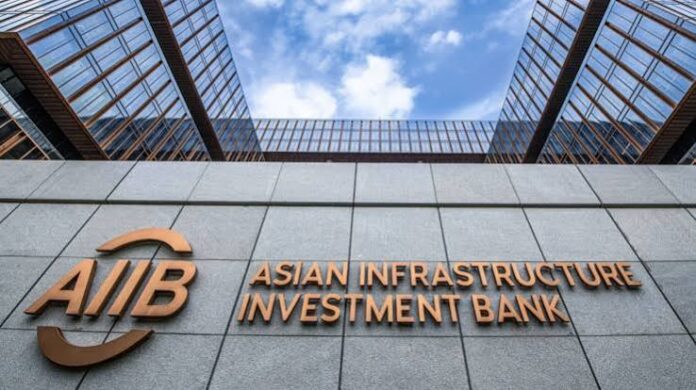
The Asian Infrastructure Investment Bank (AIIB) and the Government of Benin have agreed on a $730 million multi-year infrastructure financing pipeline for 2027–2028, establishing a framework for potential investment in energy, food security, economic resilience and climate policy.
The agreement, announced on September 24, marks AIIB’s first multi-year rolling pipeline in Africa. It is designed to support the identification and preparation of projects before they advance to due diligence and approval.
The arrangement comes as Benin works to translate its newly adopted Vision 2060 into longer-term investment programmes while addressing fiscal and climate pressures associated with rapid infrastructure development.
According to AIIB, the indicative $730 million pipeline will include potential operations through its Energy, Food Security and Economic Resilience Facility, alongside climate policy-based financing. About $250 million is expected to be allocated to policy-based financing directly linked to Vision Benin 2060. However, individual projects will still be subject to preparation, due diligence and approval.
The framework provides Benin with a structured approach to identifying and preparing projects ahead of financing, rather than relying on a series of individual infrastructure transactions.
Benin has also committed resources to AIIB’s Project Preparation Special Fund, highlighting the importance of early-stage project development. Feasibility studies, technical assessments, safeguards and financial structuring can all influence whether proposed infrastructure projects become bankable.
Project preparation is particularly important in a region where access to capital represents only one part of the infrastructure challenge. Power, transport, water and climate-resilience projects can require extensive preparation before securing large-scale financing. Poor preparation can increase transaction costs, delay implementation and leave governments with projects that are difficult to finance commercially.
For African economies dealing with high capital costs, strengthening the link between national development priorities and investment-ready projects is therefore an important part of infrastructure financing.
Benin’s infrastructure needs are also connected to its wider economic transformation. The World Bank has identified investment, industrial expansion, transport and digital infrastructure improvements as important elements of the country’s growth trajectory.
The bank’s recent country assessment reported that Benin’s economy grew by 8% during the first three quarters of 2025, with services and industry among the main drivers. The Glo-Djigbé Industrial Zone and expanding trade activity are also contributing to structural changes in the economy.
Energy infrastructure remains central to this transition. African Development Bank data previously showed that electricity access in Benin rose from 36.5% in 2020 to almost 40% in 2023, while extensive construction of high- and low-voltage networks was under way.
In June 2026, the World Bank approved a $200 million regional financing package covering Benin, the Central African Republic, Liberia and Sierra Leone to expand access to reliable and clean electricity through distributed renewable-energy systems. The projects demonstrate the level of investment required to extend electricity access to underserved communities while supporting productive economic activity.
Climate considerations add another dimension to Benin’s infrastructure requirements. Although the country accounts for a very small share of global greenhouse-gas emissions, it remains exposed to significant climate risks.
The World Bank has identified agriculture, urban infrastructure, transport networks, water resources and human development as areas requiring stronger resilience. It has also warned that, without additional adaptation measures, climate change could lead to substantial economic losses over the longer term.
Against this backdrop, the resilience and quality of infrastructure financed through the new pipeline will be important alongside the amount of capital deployed. Roads, electricity networks, water systems and other public assets can create costs and vulnerabilities that persist for decades.
Incorporating climate risks into project design can affect maintenance requirements, continuity of services and the long-term fiscal burden carried by governments.
The financing framework also demonstrates the role of policy-based finance alongside conventional infrastructure lending. The entire $730 million is not intended solely for physical infrastructure, as the arrangement also includes potential financing tied to economic resilience and climate policy.
This approach reflects a wider development-finance trend of combining capital investment with reforms aimed at improving the institutional environment in which infrastructure is planned, financed and maintained.
At the same time, Benin will need to ensure that additional external financing remains consistent with its debt-management objectives.
The IMF reported earlier this year that public debt was estimated at 60.5% of GDP in 2024 after a revision to the treatment of several loans. The country was also continuing with fiscal consolidation and debt-management reforms.
The IMF further reported that Benin successfully issued a $500 million seven-year sukuk in January 2026 and reopened a 2038 Eurobond for an additional $350 million. This leaves the country with access to international capital while maintaining the need for attention to debt sustainability and the cost of servicing public liabilities.
The financing challenge extends beyond Benin. Across Africa, governments are seeking to expand energy, transport, water and digital infrastructure while dealing with limited fiscal space and higher financing costs.
Development finance institutions are therefore increasingly expected to help governments develop projects capable of attracting broader sources of capital, including private investment and blended finance, while limiting excessive risks to public balance sheets.
Benin’s contribution to AIIB’s project-preparation fund is relevant in this context because the preparation of projects can affect how effectively development finance is converted into infrastructure and economic activity.
For local institutions and businesses, properly prepared projects could create opportunities in construction, engineering, energy services, logistics and maintenance. For communities, the eventual measure will be whether the investments improve access to electricity, transport, water and other essential services.
The $730 million agreement is therefore a financing framework at an early stage, rather than $730 million in immediately approved project expenditure. Its eventual impact will depend on how projects are selected, prepared, financed and implemented, as well as whether the resulting infrastructure supports productivity while remaining resilient to climate and fiscal pressures.
For Africa’s wider infrastructure market, the arrangement provides another example of national development strategies being linked to structured, longer-term financing pipelines. As governments work to balance economic growth, climate resilience and constrained public finances, converting development priorities into credible, investment-ready infrastructure programmes remains an important part of securing sustainable investment.
Source: africasustainabilitymatters
Do you want to share your impact stories or pitch the coverage of your CSR event to us? E-mail: editor@impactwatch.net or *Phone +234-806-795-0250 (Whatsapp &Text)


