

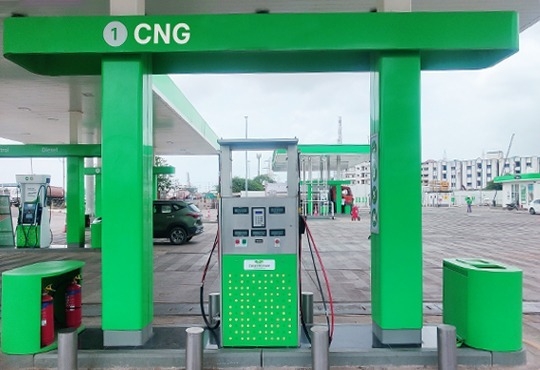
The National Automotive Design and Development Council (NADDC) has disclosed that 81 companies have so far received licences to retail Compressed Natural Gas (CNG) in Nigeria.
The Director-General and Chief Executive Officer of the council, Otunba Oluwemimo Joseph Osanipin, disclosed after meeting with President Bola Tinubu at the Presidential Villa, Abuja, where he spoke with State House correspondents.
Osanipin said the rise in the number of licensed CNG retailers showed that progress was being made in expanding the infrastructure needed to support the Federal Government’s CNG policy.
He explained that the policy would require substantial investment in filling stations, mobile refuelling units and gas production facilities before its benefits could be fully experienced across the country.
“You can’t put a policy in place today and start having the immediate impact,” he said.
According to the NADDC boss, investment in CNG infrastructure is already underway, with efforts focused on improving access to the fuel for motorists.
He said the agency overseeing the CNG programme had informed him that approximately 81 firms had been licensed to participate in gas retailing, compared with only about four previously.
“So, which means we are making progress in that regard. When you realise that we have about four before, and now we have this, so gas is now more available in some states,” he said.
Osanipin also pointed to the potential financial benefits of switching from petrol to CNG, citing the experience of a motorist who travelled to Jigawa and Kano.
He said the motorist was able to obtain CNG in Kano and substantially reduce his fuel expenses.
“I was discussing with someone that I travelled to Jigawa, filled, and filled again. When he got to Kano, he saw CNG, got gas in Kano, and he filled, and he was able to reduce its cost from over N200,000 to about N40-something thousand naira, and that’s massive,” Osanipin said.
He noted that fleet operators were already enjoying the benefits associated with the CNG policy. However, he said a key priority going forward would be ensuring that reduced operating expenses translate into lower prices for ordinary Nigerians.
“I have seen a lot of people who are benefiting from it, but they refuse to transfer the price to the masses. So that is going to be the next stage,” he said.
Despite the progress, Osanipin stressed that government needed to ensure adequate infrastructure was in place before stronger enforcement measures were introduced to drive wider CNG adoption.
He added that the expansion of CNG infrastructure formed part of wider efforts to improve transportation while encouraging the use of cleaner energy alternatives in Nigeria.
On electric mobility, the NADDC chief executive disclosed that infrastructure had been established in about 16 universities to support the development and adoption of electric vehicles.
He further revealed that the first batch of electric vehicles President Tinubu had promised to civil servants had been delivered.
“And today you must have heard in the news that the first batch of the electric vehicle that the President promised civil servants, the first batch was delivered today, and they are all electric vehicles, and this is the beginning of more and more that will come,” he said.
Osanipin said these developments formed part of the Federal Government’s broader efforts to strengthen Nigeria’s automotive industry and support a transition towards transportation that is cleaner and more affordable.
Source: leadership.ng
Do you want to share your impact stories or pitch the coverage of your CSR event to us? E-mail: editor@impactwatch.net or *Phone +234-806-795-0250 (Whatsapp &Text)


