

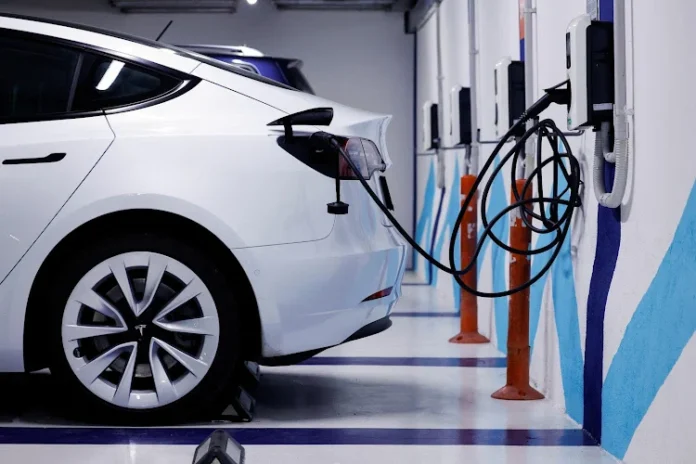
The Federal Government of Nigeria (FGN) has approved tax waivers for nearly 4,000 electric vehicles (EVs) imported into Nigeria during the first half of 2026, reinforcing efforts to encourage electric mobility and stimulate business opportunities within the emerging clean transportation industry.
Government data reviewed by Reuters indicated that the approvals represent the first batch processed under a new government programme designed to promote cleaner transportation through tax incentives and initiatives supporting local vehicle assembly.
The policy is being implemented as Nigeria attempts to reduce reliance on petrol and diesel-powered vehicles while contending with persistent electricity shortages, inadequate charging infrastructure and high operating expenses for businesses and households.
Nigeria’s 2022 Energy Transition Plan targets electric vehicles making up 60 per cent of the country’s vehicle fleet by 2050. However, the transition remains at an early stage, with EVs estimated to represent less than one per cent of vehicles currently on Nigerian roads.
The government has introduced several fiscal measures to encourage electric vehicle adoption.
In 2024, Nigeria exempted electric vehicles from value-added tax. This year, import duties on EVs were reduced to zero from five per cent.
The incentives could reduce the cost of importing and selling electric vehicles while creating opportunities for businesses involved in vehicle distribution, maintenance, charging infrastructure, battery technology, renewable energy and related services.
However, access to reliable electricity remains one of the major constraints confronting the sector.
Nigeria’s national grid supplies approximately 4,000 megawatts to a population of more than 200 million people. Consequently, households and businesses continue to depend heavily on petrol and diesel generators whenever grid power is unavailable.
The electricity challenge extends to companies operating within the EV ecosystem. Charging stations, dealerships and battery-swapping businesses are increasingly using generators to maintain operations during power outages.
Bolanle Boboye, an executive at Saglev, an electric vehicle manufacturer affiliated with Chinese automaker Dongfeng, said Nigeria should advance its energy and transportation transitions at the same time instead of waiting for the electricity sector to become fully reliable.
“If we wait for electricity to become perfect before adopting EVs, the rest of the world will leave us behind,” Boboye said.
He also argued that EVs could still deliver environmental benefits even when their batteries are charged with electricity generated from diesel-powered sources, because they can reduce overall emissions compared with conventional vehicles.
The charging infrastructure deficit remains substantial.
A policy brief reviewed by Reuters estimated that Nigeria had only about 48 public EV charging stations as of late 2025, with most located in Lagos and Abuja. By comparison, South Africa had more than 500 public charging stations.
Nigeria’s Energy Transition Plan had projected approximately 60 charging stations by 2030, underscoring the scale of investment required in charging infrastructure to support widespread EV adoption.
For many existing EV owners, charging at home has become the most practical alternative. Vehicle owners can connect portable charging cables to household electricity outlets, although unreliable power supply means that alternative energy sources are often necessary.
The electricity challenge is also influencing the types of vehicles attracting interest in Nigeria.
Boboye said extended-range electric vehicles, which combine battery-powered propulsion with a fuel-powered range extender, are becoming increasingly popular because they reduce reliance on charging infrastructure.
According to him, sales of these vehicles doubled this year as consumers looked for the lower operating costs associated with electric propulsion without completely giving up access to fuel-powered backup.
Chinese automakers, including BYD and Geely, have also increased their presence in Nigeria with electric and hybrid vehicles.
Tim Motors, Geely’s Nigerian partner, said new-energy vehicles, including electric and hybrid models, represent about two per cent of its vehicle sales in Nigeria.
Leon Zhan, head of Tim Motors, said Nigeria’s large automotive market offers an opportunity to gradually replace its predominantly used-vehicle fleet with newer and cleaner alternatives.
“Nigeria is one of the largest car markets in Africa, but it is dominated by second-hand vehicles. We want to change that,” Zhan said.
For small businesses and commercial transport operators, electric motorcycles and tricycles could present an even larger opportunity than passenger vehicles.
Nigeria has more than 15 million motorcycles, while commercial motorcycle and tricycle operators have experienced significant increases in operating costs since the removal of the petrol subsidy in 2023.
Electric alternatives could help operators lower their daily fuel expenses while creating new markets for local businesses involved in vehicle sales, servicing, battery management and charging.
Stanley Nwankwo, co-founder of electric mobility start-up Donda X Limited, said electric motorcycles and tricycles could reduce operating costs by about two-thirds compared with petrol-powered alternatives.
Battery swapping is also emerging as a potential response to Nigeria’s charging infrastructure challenge.
Mobility companies such as MAX and Spiro are investing in battery-swapping networks that enable riders to exchange depleted batteries for fully charged ones within minutes.
The model reduces the amount of time commercial operators spend waiting for vehicles to charge and allows batteries to be charged centrally when electricity is available.
The emerging ecosystem could create business opportunities beyond vehicle sales, including battery-swapping operations, charging services, EV maintenance, spare parts, fleet management, renewable energy solutions and financing for electric mobility assets.
The Federal Government’s tax waivers therefore represent more than an incentive for vehicle imports. They could support the development of an emerging clean transportation business ecosystem, particularly if government continues backing local assembly, charging infrastructure and alternative energy solutions.
However, tax incentives alone may not be sufficient to achieve mass adoption.
For electric mobility to become commercially viable at scale, Nigeria will need reliable electricity, more charging and battery-swapping infrastructure, affordable financing and a stronger network of technicians and service providers.
The business opportunity is therefore significant, but so is the infrastructure challenge. As Nigeria works towards its 2050 electric mobility target, companies capable of addressing the practical barriers to EV adoption could become important participants in the country’s clean transportation transition.
Source: MSME Africa Online
Do you want to share your impact stories or pitch the coverage of your CSR event to us? E-mail: editor@impactwatch.net or *Phone +234-806-795-0250 (Whatsapp &Text)


