

Nigeria is exploring the possibility of raising more than $500 billion through blue bonds to finance eligible maritime, inland waterways and other blue economy projects, as the Federal Government seeks additional investment to achieve its target of building a $1 trillion economy by 2030.
The proposal was discussed at an Investment Partnership Lab organised by the Federal Ministry of Budget and Economic Planning in partnership with the European Union Delegation to Nigeria and ECOWAS. The meeting took place on the sidelines of the 32nd Nigerian Economic Summit in Abuja.
The potential financing comes as the government seeks to address funding constraints that limit its ability to deliver infrastructure and productive-sector investments through public budgets alone. Although the blue bond opportunity could mobilise substantial capital, the funding has not yet been raised or secured.
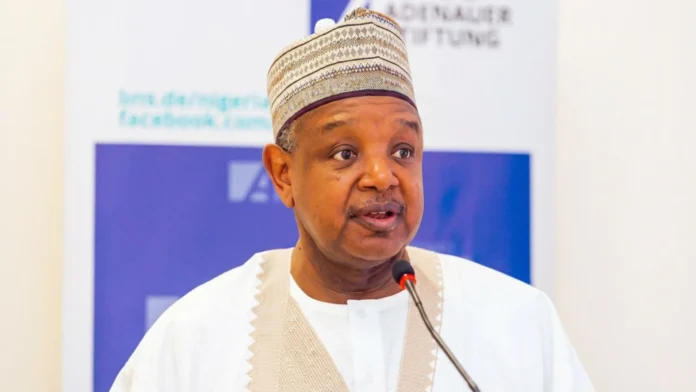
Minister of Budget and Economic Planning, Senator Abubakar Atiku Bagudu, said Nigeria must attract additional resources through grants, technical assistance, development cooperation and private investment to complement government spending.
Speaking at the Lab, which was facilitated by Particip GmbH, Bagudu said reaching the $1 trillion economic target would require coordinated investments to expand productive capacity, create jobs and improve living standards.
He emphasised that identifying projects would not be sufficient without developing commercially viable investment opportunities capable of attracting financing and producing measurable economic and social benefits.
The meeting brought together government agencies, development finance institutions, state governments, private-sector operators and development partners to examine innovative financing models for integrated transport and trade infrastructure.
Participants reviewed 17 indicative integrated investment programmes intended to link productive sectors with transport infrastructure and potential financing sources.
One of the major proposals was the Sealink Project, which aims to connect inland waterways, coastal shipping, river ports, roads, railways and logistics facilities within an integrated transport network.
Inland waterways were identified as a potentially cost-effective option for moving bulk cargo, easing pressure on highways and extending the service life of road and rail infrastructure.
However, participants said developing the sector would require hydrographic surveys, navigability assessments, maritime security measures, dependable cargo demand and commercially sustainable operating arrangements.
They also stressed the need for closer coordination between federal and state governments to avoid duplicating projects, allocate resources more efficiently and ensure transport infrastructure supports productive activities across state boundaries.
Bagudu maintained that Nigeria could not depend solely on annual budgetary allocations to meet its development needs. He identified the European Union’s Global Gateway Investment Strategy as a platform for attracting European capital, technology and expertise.
He also highlighted the Federal Government’s Ward Development Strategy, backed by a nationwide ward-level survey, as a means of identifying community needs and aligning public spending and development-partner interventions with local priorities.
Under the strategy, investments are expected to address identified community gaps more directly, helping ensure that economic growth translates into improved livelihoods.
Discussions on the blue economy also covered opportunities under the EU-supported Regional Trade and Transport/Abidjan-Lagos-Ouagadougou Corridor (CALAO), the West Africa Sustainable Oceans Programme (WASOP) and the BBA+ initiative.
A presentation on BBA+ outlined 10 blue economy programme areas, seven of which had been preliminarily assessed as potentially suitable for blue financing.
The proposed financing could be directed towards eligible maritime transport, inland waterways, fisheries, coastal protection and renewable energy projects.
Participants underscored the need to develop bankable projects and appropriate financing structures to attract investors and advance eligible investments.
Beyond infrastructure financing, the Lab examined ways to increase investment in African businesses through Boost Africa, an initiative backed by the European Investment Bank (EIB).
Representatives of the EIB, TLcom Capital and beneficiary businesses, including Beacon Power Services and ChipMango, discussed the role of venture capital and technical assistance in strengthening entrepreneurship, innovation and enterprise development.
The discussions also featured Boost Ventures, with announced plans for €129 million in investment financing and €40 million in technical assistance.
The initiative highlighted the role of development finance institutions in supporting businesses that can expand productive capacity, generate employment and contribute to economic diversification.
To advance the proposals towards implementation, participants outlined follow-up engagements with the Nigerian Export-Import Bank (NEXIM), the National Inland Waterways Authority (NIWA), the Nigerian Navy and other relevant institutions on the Sealink Project.
The proposed engagements will address navigability, maritime security, cargo demand, infrastructure requirements and the development of commercially sustainable transport corridors.
Participants also called for priority infrastructure and blue economy projects to be consolidated into investment pipelines for discussions with the European Union, EIB, other development finance institutions and private investors.
State governments are expected to participate in further consultations, particularly through the forthcoming Joint Planning Board, on inland waterways investments, counterpart contributions and related development opportunities.
Another priority is a high-level engagement involving relevant fiscal, regulatory and financial institutions and the BBA+ initiative to advance preparations for green and blue bonds.
The agreed follow-up actions, expressions of interest and institutional responsibilities are to be brought together in a coordinated 90-day Partnership Action Matrix.
Source: The Guardian
Do you want to share your impact stories or pitch the coverage of your CSR event to us? E-mail: editor@impactwatch.net or *Phone +234-806-795-0250 (Whatsapp &Text)


