

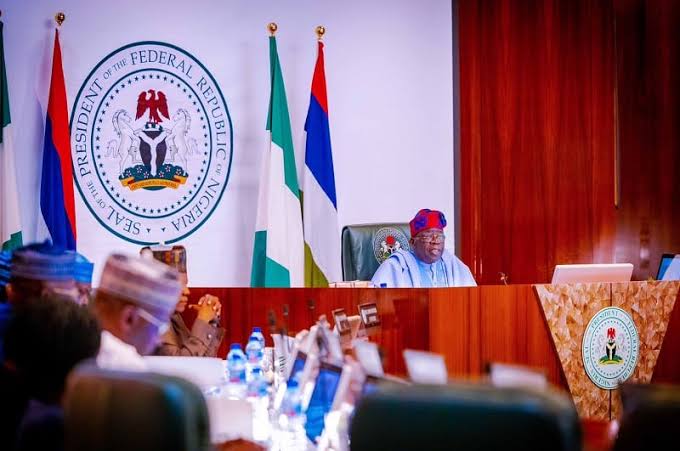
The Federal Government of Nigeria has launched the “Hire from Nigeria” campaign, an initiative designed to connect Nigerian professionals, skilled workers, digital experts, creatives and service providers with international employers and clients.
The programme is intended to help Nigerians secure international employment opportunities and service contracts while continuing to work from Nigeria. Pundits believe the initiative could generate as many as one million export-oriented jobs by 2030, while also attracting foreign investment, increasing foreign exchange earnings and supporting sustainable national development.
Implementation of the initiative will be led by the Federal Ministry of Education in partnership with the Federal Ministry of Industry, Trade and Investment, the Federal Ministry of Information and National Orientation, and the Ministry of Foreign Affairs.
The participating ministries will work alongside the National Talent Export Programme (NATEP), universities, development partners and private-sector stakeholders to advance the campaign.
At the launch, the Minister of Education, Dr. Tunji Alausa, described Nigeria’s youthful population as a significant human-capital advantage. He said the country must convert that advantage into a demographic dividend through quality education, practical skills, credible certification and access to decent, well-paying employment.
More than 70 per cent of Nigeria’s population is below the age of 30, a demographic advantage that major developed economies increasingly lack.
Japan, the world’s third-largest economy, is experiencing a rapidly ageing population that is also declining. Germany, the world’s fourth-largest economy, faces a similar demographic challenge.
South Korea, one of the Asian Tigers, is also confronting an ageing population and has introduced a stipend of $76,000 for each woman who gives birth.
Against this backdrop, Nigeria’s large youthful population has the potential to become a significant source of globally competitive talent if young Nigerians are adequately trained and equipped.
Alausa said the Federal Government is therefore committed to ensuring Nigerians receive the training and certification required to compete for global employment opportunities when they become available.
The government has also taken steps to reduce financial barriers that previously forced some Nigerian students in tertiary institutions to discontinue their education.
One of the measures is the establishment of the National Education Loans Fund (NELFUND), which supports students whose families are unable to meet their educational expenses.
Under the scheme, NELFUND pays the school-fee component of an approved loan directly to the relevant higher institution. This arrangement is intended to prevent the funds from being diverted from their designated purpose.
Operators of the scheme believe some financially disadvantaged students could otherwise divert the money to other needs and eventually leave school.
In addition to covering the stipulated school fees, NELFUND provides beneficiary students with a monthly upkeep stipend of N20,000.
So far, N303 billion has been advanced to 850,000 students who might previously have been forced to leave tertiary education because of financial difficulties. The intervention forms part of the Federal Government’s broader effort to ensure Nigerians can continue acquiring the education and skills needed for employment.
To support the long-term sustainability of the “Hire from Nigeria” initiative, the Federal Ministry of Education is also changing the direction of the education system by reducing its heavy reliance on theoretical learning.
The new emphasis is on practical, competency-based and industry-responsive training that equips participants with skills relevant to employment.
Currently, 200,000 Nigerians are being trained across 1,200 skills centres under a model that allocates 80 per cent of training to practical instruction and 20 per cent to theory.
Participants are assessed and certified through the National Skills Qualification Framework (NSQF).
The Federal Ministry of Information and National Orientation is also developing a Digital Technology Academy expected to train 35,000 Nigerians in areas including software development, cyber security, IT automation, artificial intelligence, machine learning, natural language processing, cloud computing and quantum computing.
The training will run for six to eight months and will lead to professional certification.
Meanwhile, partnerships with technology companies have resulted in about 50 tertiary institutions being enrolled in the AWS Online Academy.
The Federal Government is positioning emerging global services, particularly Business Process Outsourcing (BPO) and digitally delivered services, as important avenues for job creation, talent retention and foreign exchange generation.
The “Hire from Nigeria” campaign also reflects changes in international trade, where knowledge, creativity, technical expertise and professional services can increasingly be delivered across national borders without the physical movement of goods.
Nigeria’s youthful population, English-language proficiency, entrepreneurial culture, and growing technology and creative industries are regarded as strategic advantages as the global economy increasingly expands its demand for services.
The campaign is scheduled to be presented to the international community during the 81st General Assembly of the United Nations on September 24, 2026.
Source:Blueprint.ng
Do you want to share your impact stories or pitch the coverage of your CSR event to us? E-mail: editor@impactwatch.net or *Phone +234-806-795-0250 (Whatsapp &Text)


