

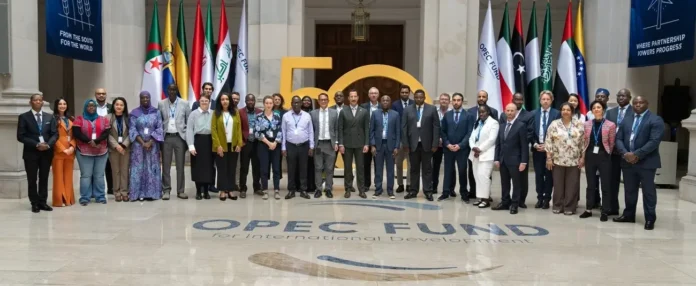
More than 50 representatives from African countries and development finance institutions met in Vienna last week for a three-day workshop aimed at strengthening environmental and social risk management in development projects.
The workshop was organised by the African Development Bank Group (AfDB), the OPEC Fund for International Development and the Netherlands Commission for Environmental Assessment (NCEA). It formed the second phase of the AfDB/OPEC FUND E&S Capacity Building initiative, launched in June 2025 in Vienna, Austria.
Senior regulatory officials from Chad, Comoros, the Democratic Republic of Congo (DRC), Kenya, Madagascar, Niger, Senegal and Uganda participated in the programme. They were joined by representatives of the World Bank, Islamic Development Bank, Asian Infrastructure Investment Bank, European Bank for Reconstruction and Development, BADEA, Saudi Fund for Development, Abu Dhabi Fund for Development, Arab Fund for Economic and Social Development, Private Infrastructure Development Group, UNESCO, and environmental consultancies Alpage and Ramboll.
The sessions combined panel discussions with case study presentations covering key environmental and social issues. These included land acquisition and resettlement, biodiversity, social inclusion, gender-based violence and sexual exploitation, abuse and harassment, cultural heritage, as well as occupational and community health and safety.
Participants also examined approaches to financing and monitoring environmental and social management plans, alongside ways financial institutions and national regulators can strengthen cooperation.
The capacity-building initiative builds on environmental and social country system assessments previously undertaken by the African Development Bank in Benin, Burkina Faso, Burundi, Chad, Comoros, Côte d’Ivoire, DRC, Eritrea, Gabon, Gambia, Madagascar, Mali, Mauritania, Morocco, Niger, Nigeria, Senegal, Sierra Leone, South Sudan, Togo, Tunisia and Uganda.
“Environmental and social safeguards do not sit on the sidelines of development; they are integral to making development more sustainable, inclusive and equitable,” said Musab Alomar, OPEC Fund Vice President for Strategy. “Ensuring strong environmental and social standards in the projects we finance is a shared responsibility and a cornerstone of effective development.”
Prof. Maman-Sani Issa, the Bank Group’s Director for Environmental and Social Safeguards and Compliance, said the partnership was creating practical opportunities for countries to exchange experience and strengthen national capacity.
“The objective is to equip our regional member countries with the knowledge and practical skills required to integrate environmental and social considerations into project design and implementation,” he said. “Stronger country systems will help improve sustainable use and preservation of the natural and human capitals across our member countries, ultimately enhancing the sustainability and development impact of projects we support.”
NCEA facilitated a focus group where country representatives and multilateral finance institutions considered ways to finance the monitoring of environmental and social management plans. Discussions also examined how institutions can work with regulators to improve monitoring and compliance.
Dennis van Peppen, Director of the Netherlands Commission for Environmental Assessment, highlighted the workshop’s role in supporting peer learning and dialogue around the challenges and opportunities associated with strengthening environmental and social country systems.
During the three-day programme, the Bank Group team also engaged partners in discussions covering co-financing, capacity building and other areas of cooperation.
The next phase of the initiative is expected to involve tailored national-level training addressing country-specific challenges while further strengthening environmental and social safeguard systems as foundations for sustainable project delivery.
Source: African Development Bank (AfDB)
Do you want to share your impact stories or pitch the coverage of your CSR event to us? E-mail: editor@impactwatch.net or *Phone +234-806-795-0250 (Whatsapp &Text)


