

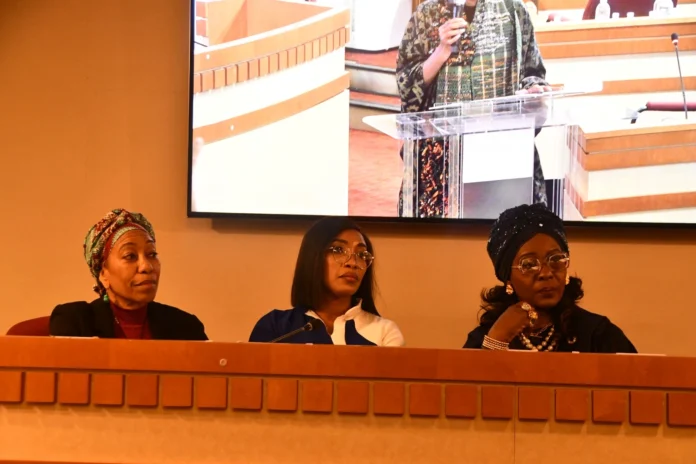
African leaders, policymakers, energy experts and development stakeholders have called for stronger African-led approaches to expanding clean cooking access and addressing energy poverty across the continent.
The call was made on Wednesday, September 23, 2026, during the pre-launch of the African Clean Cooking Transition (ACCT) Forum at the African Union Hall in New York, held on the sidelines of the High-Level Week of the 81st United Nations General Assembly (UNGA 81).
Organised by the Global Sustainable Energy & Leadership (G-SEL) Network in collaboration with the African Energy Commission (AFREC) of the African Union, the forum brought together governments, policymakers, energy professionals, development organisations, investors and other stakeholders to consider practical pathways for accelerating Africa’s clean cooking transition.
The forum was themed “Energy, climate action and poverty eradication on Africa’s terms.”
Discussions examined how clean cooking could contribute to improved energy access, job creation, business development and poverty reduction. The ACCT initiative is designed as an African-led economic platform that places clean cooking at the centre of Africa’s energy transition while creating opportunities in enterprise development, digital innovation, climate finance, investment, local employment and sustainable development.
Participants included G-SEL Network Executive Director and ACCT Forum Convener, Joy Osiomwanne-O; Chairperson of the Nigeria Governors’ Spouses’ Forum and First Lady of Kwara State, H.E. Amb. Prof. Olufolake AbdulRazaq; AFREC Executive Director, Dr. Rashid Ali Abdallah; and Presiding Officer of the African Union Economic, Social and Cultural Council (ECOSOCC), Louis Cheick Sissoko.
The forum also had H.E. Mrs. Priscilla Otti, First Lady of Abia State, and H.E. Hajiya Zulaihat Dikko Radda, First Lady of Katsina State, alongside Prof. AbdulRazaq. Their participation brought together representatives of Nigeria’s subnational leadership and underscored the importance of inclusive leadership in addressing energy access and clean cooking challenges.
International perspectives came from Shiyana Gunasekara, Lead, Global Clean Cooking Access for the U.S. Energy Secretary and Deputy Director, Office of African and Middle Eastern Affairs at the U.S. Department of Energy (DOE), and Anne Hyre, Executive Director of Bettering Lives Foundation.
Other participants included Nigeria’s Minister of Women Affairs and Social Development, Hajiya Imaan Sulaiman-Ibrahim; Minister of Economy, Mozambique, Basilio Zefanias Muhate; Ghana’s Deputy Minister of Energy and Green Transition, Richard Gian-Mensah; Tanzania’s Deputy Minister for Energy, Salome W. Makamba; Lagos State Governor, Babajide Sanwo-Olu; and Zamfara State Governor, Dauda Lawal.
The forum also featured contributions from the United Nations Development Programme (UNDP), the International Energy Agency (IEA), the Federal Capital Territory Administration and other stakeholders working across energy access, development and climate action.
A major focus of the discussions was the need to accelerate the shift towards cleaner cooking solutions through greater utilisation of Liquefied Petroleum Gas (LPG), stronger transparency in Environmental, Social and Governance (ESG) reporting and the development of carbon-credit financing mechanisms.
Participants also considered the need for stronger policy alignment and collaboration across the clean cooking value chain, alongside greater use of investment, technology and innovation to expand access to cleaner cooking solutions across African markets.
The meeting further examined clean cooking as an avenue for economic development, job creation, enterprise growth and poverty reduction, rather than solely as an environmental or energy concern.
Attention was also given to women, who play a central role in household energy use and small-scale economic activities. Participants considered ways to ensure women benefit directly from the transition through local enterprises, skills development, incentives and green job opportunities.
The forum reinforced the importance of African leadership in developing and implementing clean cooking solutions that reflect the continent’s diverse economic, cultural and energy realities. While international partnerships remain important, the ACCT platform seeks to strengthen African ownership through collaboration among governments, industry, investors, development partners, innovators, communities and civil society.
The organisers said the commitments, perspectives and ideas generated at the New York meeting would contribute to preparations for the full launch of the African Clean Cooking Transition Forum.
The main ACCT Forum launch is scheduled for the G-SEL Conference in Westminster, London, from December 15 to 17, 2026. The initiative is expected to build on the discussions and relationships established during the UNGA 81 pre-launch.
The initiative will continue discussions on how Africa can develop energy and climate solutions that respond to its economic realities while contributing to energy access, poverty reduction, economic opportunity and sustainable development.
The ACCT Forum will therefore continue as a platform bringing together African governments, international partners, energy stakeholders, investors, development organisations and communities around the shared objective of advancing practical, scalable and African-led solutions for the clean cooking transition.
Source: Vanguard
Do you want to share your impact stories or pitch the coverage of your CSR event to us? E-mail: editor@impactwatch.net or *Phone +234-806-795-0250 (Whatsapp &Text)


