

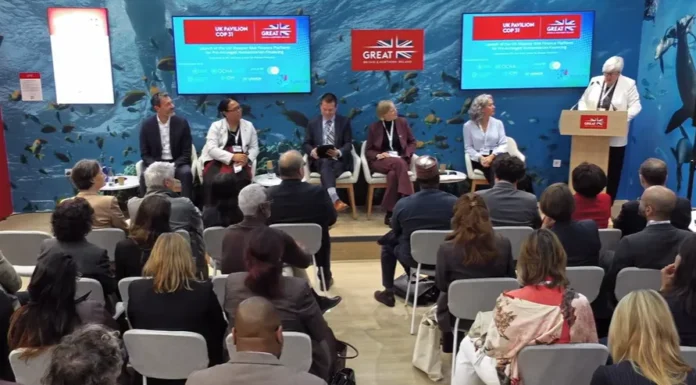
The United Kingdom’s Foreign, Commonwealth & Development Office (FCDO) and the Insurance Development Forum (IDF) have agreed to launch a new Insurance Partnership for Development in 2027, aimed at improving financial resilience and widening access to insurance in emerging markets and developing economies.
The initiative was announced on 12 November 2026 at the COP31 climate conference in Antalya, Türkiye. It will help low- and middle-income countries prepare financially for economic and climate-related shocks while supporting investment and sustainable growth.
The agreement addresses persistent insurance coverage gaps in developing economies, where governments, businesses and households remain exposed to disasters and climate risks without sufficient financial protection. Limited insurance coverage can force governments to rely on emergency borrowing after disasters, slow reconstruction and discourage investment in infrastructure and productive sectors.
Under the arrangement, the UK government and IDF will bring together public- and private-sector expertise to tackle obstacles to insurance development. Insurers, reinsurers, governments, regulators and international financial institutions will be involved in identifying practical measures to expand risk protection and strengthen domestic insurance markets.
The protection gap affects more than government disaster coverage. It includes inadequate insurance for households, businesses and productive assets, as well as limited protection for infrastructure projects exposed to climate hazards. When these risks are uninsured, the resulting financial losses can affect national budgets, private investment, employment and household incomes.
For countries with limited fiscal capacity, the absence of pre-arranged disaster financing can create considerable pressure on public finances. After floods, droughts, storms and other major shocks, governments may have to divert development funds, seek emergency assistance or borrow to pay for recovery. Such responses can delay long-term development projects and add to existing debt burdens.
The partnership will concentrate on three priorities: expanding access to financing arranged before disasters occur; using insurance to lower investment risks and encourage capital flows into emerging and developing economies; and strengthening domestic insurance markets to increase coverage in low- and middle-income countries and improve their links with international insurance and reinsurance markets.
The focus on advance financing reflects an approach that encourages governments to prepare for disaster-related costs before emergencies happen. Instead of depending mainly on borrowing and external assistance after a crisis, countries can put insurance and other risk-financing arrangements in place beforehand. These instruments can provide funds for emergency response and recovery, reducing the pressure on public services and development programmes.
The investment component seeks to address risks that can make projects in developing economies less attractive to investors. Infrastructure assets are often exposed to floods, storms, droughts and other climate-related hazards. When insurance is unavailable or costly, investors may seek higher returns, postpone projects or avoid particular markets.
Insurance can transfer specified risks and improve the conditions for attracting capital to infrastructure development. In energy, transport, water and agriculture, stronger risk-management arrangements could support investment in assets that are important to economic development but increasingly vulnerable to climate impacts.
The third area of work will address weaknesses in domestic insurance markets. Insurance penetration remains low in many low- and middle-income countries, leaving households and businesses exposed to financial losses. Improving local insurance providers, regulatory systems and distribution channels could extend coverage and strengthen the ability of domestic markets to manage risks.
The FCDO and IDF are expected to jointly lead the partnership through research, technical support and high-level engagement. Their networks will be used to convene public institutions and private-sector organisations to address challenges that individual organisations cannot resolve independently.
Rachel Kyte, the UK Special Representative for Climate, announced the agreement at COP31. She said the scale of climate-related challenges called for stronger collaboration between governments and private-sector institutions. The partnership, she noted, would help expand financial protection tools that preserve development gains and support future economic growth in a changing climate.
Michel Liès, Chairman of Zurich Insurance and Chair of the IDF Steering Committee, said the agreement builds on longstanding cooperation between the UK government and the Insurance Development Forum. He pointed to the opportunity to establish a common strategy for increasing insurance penetration in low- and middle-income countries, where access to risk-management expertise and insurance products could improve resilience.
The agreement also received support from representatives of the insurance industry. Pamela Thomson-Hall, Chief Executive Officer International at WTW and a member of the IDF Steering Committee, said the partnership would offer another platform for coordinating industry expertise and insurance solutions to close protection gaps in emerging and developing economies.
Patrick Tiernan, Chief Executive of Lloyd’s of London and an IDF Steering Committee member, said the initiative could enable the insurance industry to strengthen resilience while helping develop sustainable commercial insurance markets.
The proposed arrangement has implications for African economies, particularly in agriculture, infrastructure, energy and small businesses, where exposure to climate risks and limited insurance coverage can restrict investment. Weather-related disruptions threaten these sectors, while governments face competing demands on public resources. Improved access to advance financing and risk-transfer mechanisms could reduce the economic impact of climate shocks.
However, the reach of the initiative will depend on whether the insurance solutions developed are affordable and accessible. Premium costs, reliable risk data, regulatory capacity and the ability of domestic insurers to underwrite local risks will all affect the expansion of coverage. Governments will also need to align insurance arrangements with their existing disaster-risk financing strategies and national climate adaptation plans.
The first phase will involve setting up governance and oversight structures and preparing a detailed programme of work ahead of the planned operational launch in 2027. This preparatory stage will establish how participating institutions will coordinate their activities, select priority markets and convert the agreement into specific commitments.
The partnership represents an effort to use insurance not only to compensate for losses but also as an instrument of development finance. Its impact will depend on its ability to widen financial protection, lower risks for investors and build stronger domestic insurance markets in countries where climate and disaster exposure continue to threaten economic development.
Source: Africa Sustainability Matters
Do you want to share your impact stories or pitch the coverage of your CSR event to us? E-mail: editor@impactwatch.net or *Phone +234-806-795-0250 (Whatsapp &Text)


