

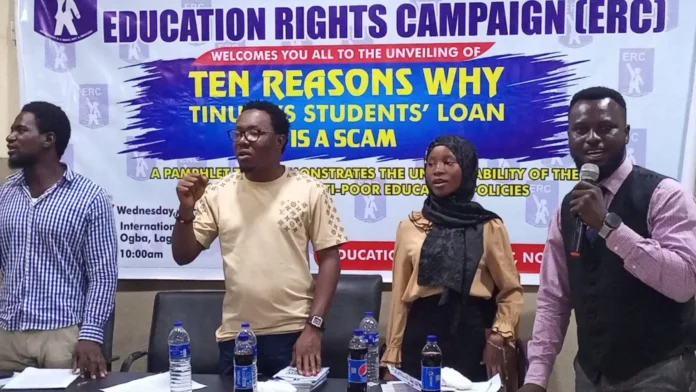
The Education Rights Campaign (ERC) has urged the Federal of Nigeria Government to provide unlimited internet access for students in public secondary and tertiary institutions, arguing that the proposed 100 megabytes (MB) daily data package is insufficient for meaningful digital learning.
The group made the demand in a statement signed by its Deputy National Coordinator, Ogunjimi Isaac, and National Mobilisation Officer, Adaramoye Michael Lenin.
ERC said the proposed allocation would have limited impact on the difficulties students face when accessing educational websites and digital learning platforms.
The Federal Government’s proposed data package is designed to provide students with access to educational resources while reducing the financial burden associated with internet-based learning. However, the campaign maintained that 100MB per day would not be enough for students who need regular access to online learning materials.
“Considering that the acclaimed data package is an initiative to provide students access to educational materials, one would expect a holistic approach which would clearly achieve this aim,” the group said.
ERC said unlimited internet access would help prevent the increasing cost of data from becoming a barrier to students seeking to participate in digital learning opportunities.
The campaign, however, stressed that improved internet connectivity alone would not resolve the digital divide. It called for greater investment in information and communication technology (ICT) centres and other digital facilities in public schools to support both students and education workers.
“Our call for an unlimited internet access package for all students is only a first step towards resolving the problem,” ERC said, adding that there was a need for massive investment in ICT centres and facilities in schools to support digital learning and the development of students and educational workers.
The group also advocated the provision of digital devices to students at heavily subsidised rates.
According to ERC, high inflation and the rising cost of living have made it increasingly difficult for many students to afford internet-enabled devices required to access online educational resources.
It said the combination of expensive internet services and the high cost of smartphones, tablets and computers continues to restrict students’ ability to fully benefit from digital education.
ERC also criticised the cost and quality of telecommunications services in Nigeria, accusing network providers of imposing what it described as “extortionist fees” while delivering poor services.
The campaign further faulted the Nigerian Communications Commission (NCC) over what it described as inadequate action on telecommunications costs and service quality. It said students and working Nigerians continue to contend with unreliable internet services despite rising data and communication costs.
The group said closing the digital learning gap would require a broader strategy combining affordable internet access with adequate infrastructure, digital devices and increased investment in education.
Beyond connectivity, ERC called for increased government funding for education and greater involvement of students, parents and education workers in decision-making within educational institutions.
The campaign also advocated the nationalisation of Nigeria’s telecommunications sector and its democratic management by workers. It argued that telecommunications services should prioritise affordability and service delivery rather than profit.
ERC maintained that expanding digital access to education would require sustained investment in connectivity, ICT facilities and devices to enable students to participate meaningfully in Nigeria’s growing digital economy.
Source: msmeafricaonline.com
Do you want to share your impact stories or pitch the coverage of your CSR event to us? E-mail: editor@impactwatch.net or *Phone +234-806-795-0250 (Whatsapp &Text)


