

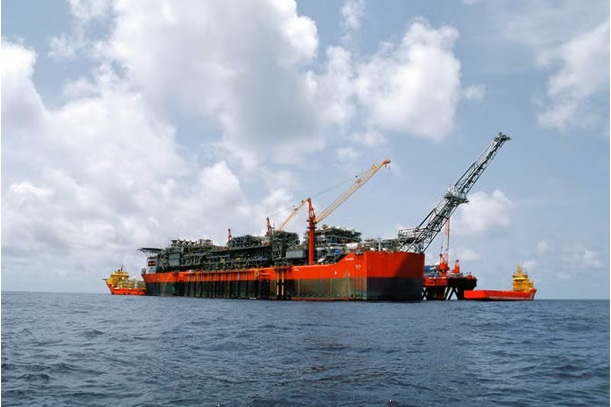
President Bola Tinubu has approved a new investment framework designed to unlock up to $50 billion in deep offshore oil and gas investments and revive major projects that have remained stalled for years.
The reform, contained in the Deep Offshore Oil and Gas Projects Incentives (Tax Remission) Order, 2026, replaces project-by-project negotiations with a broader, rules-based system intended to give investors greater certainty.
The framework is expected to support a new generation of deep offshore developments, starting with the estimated $10 billion Bonga South West project.
Under the new arrangement, NNPC Limited, the government’s nominated counterparty under Production Sharing Contracts (PSCs), has been authorised to make the necessary amendments to eligible contracts to implement the incentive framework.
The policy represents a shift away from granting incentives individually to specific projects. Instead, it establishes clear eligibility requirements and implementation procedures that can apply to multiple qualifying developments.
The government expects the approach to reduce uncertainty for investors and create a more predictable environment for long-term capital deployment in Nigeria’s deep offshore sector.
The reform followed President Tinubu’s engagement with Shell Chief Executive Officer, Wael Sawan, during which the President directed government agencies to develop measures capable of unlocking a new wave of deep offshore investment.
Qualifying projects under the framework will be expected to maximise work carried out in Nigeria where commercially and technically feasible.
This requirement could create opportunities for Nigerian companies operating in engineering, fabrication, marine logistics, technical services and project management.
The government is targeting up to $50 billion in deep offshore investments, alongside increased oil production and stronger domestic participation in project execution.
For Nigerian businesses, the anticipated investment pipeline could increase demand for local suppliers and service providers throughout the oil and gas value chain. The government is also seeking to generate skilled employment, strengthen local supply chains and increase Nigerian participation in large-scale offshore projects.
The framework could therefore create opportunities for businesses able to meet the technical, operational and compliance requirements associated with deep offshore developments.
The government said the new framework was developed through an inter-agency process led by the Presidency, with contributions from fiscal, legal, commercial and regulatory institutions, as well as industry stakeholders.
Tinubu commended the Federal Ministry of Justice, Federal Ministry of Finance, Federal Ministry of Petroleum Resources, Nigeria Revenue Service, NNPC Limited, Nigerian Upstream Petroleum Regulatory Commission and Nigerian Content Development and Monitoring Board for their contributions to the reform.
The President stressed that certainty for investors would be crucial to attracting long-term capital into Nigeria’s oil and gas industry.
“The countries that attract long-term investment are not necessarily those with the greatest natural resources. They are the ones that provide the greatest certainty,” Tinubu said.
He added that the framework would establish conditions for increased capital inflows, growth of Nigerian businesses and greater national value from Nigeria’s natural resources.
If effectively implemented, the framework could help revive stalled offshore developments while creating greater opportunities for Nigerian companies to participate in major projects and the supply chains generated by large-scale oil and gas investments.
Source: MSME Africa Online
Do you want to share your impact stories or pitch the coverage of your CSR event to us? E-mail: editor@impactwatch.net or *Phone +234-806-795-0250 (Whatsapp &Text)


