

South Africa requires more than $15.6 billion (R250 billion) in climate financing over the next decade to implement measures aimed at protecting its economy, infrastructure and communities from the growing effects of climate change.
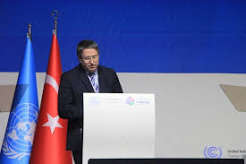
Environment Minister David Maynier disclosed the funding requirement on November 17 during the COP31 climate conference in Antalya, Türkiye, where governments are negotiating more predictable financial support for developing countries facing increasingly severe climate impacts, including floods, droughts, heatwaves and growing pressure on food and water resources.
The proposed financing will cover adaptation initiatives across several sectors, including water management, agriculture, public health, human settlements, infrastructure, energy, mining and coastal protection.
“In accordance with our second Biennial Transparency Report, which we will submit this year, South Africa needs investments and provision of climate finance of over R250 billion, about $15.6 billion, to fully implement adaptation actions between 2026 and 2035,” Maynier said, according to reports of the minister’s address.
The estimated requirement represents an average of more than $1.5 billion annually between 2026 and 2035, although actual spending is expected to vary across the period.
Major infrastructure developments involving water storage, drainage systems, transport networks and coastal protection require substantial initial investments. Meanwhile, the operation of early-warning systems, public-health monitoring and agricultural support programmes will require sustained government funding.
South Africa’s adaptation requirement forms part of a much larger climate financing challenge. The country is estimated to need approximately R3.7 trillion, equivalent to $213 billion, to address climate change and transition towards a lower-carbon economy.
Pretoria has reported about $14.36 billion in commitments towards its carbon-neutrality objectives. However, these commitments include loans, guarantees and private-sector investments, rather than exclusively grants or direct government financing.
The distinction is significant because announced financial commitments do not necessarily translate into immediately accessible funding. Loans for projects without direct revenue streams can also increase public debt burdens.
Infrastructure designed to protect communities from climate impacts, including stormwater drainage, public-health facilities and safeguards for vulnerable settlements, delivers substantial economic and social benefits. However, such projects often lack the predictable revenue streams required to attract conventional commercial investment.
Maynier expressed concern about the widening adaptation financing deficit and called for a benchmark to triple adaptation finance by 2035.
South Africa is also pushing for predictable replenishment of multilateral climate funds and the completion of arrangements that would allow the Adaptation Fund to serve the Paris Agreement. These arrangements include accessing a share of proceeds generated through the agreement’s Article 6.4 carbon-market mechanism.
At the national level, the country is implementing its Climate Change Act and National Adaptation Strategy across different tiers of government, while individual economic sectors are developing their respective adaptation plans.
These plans cover agriculture and food security, water resources, healthcare, infrastructure, human settlements and coastal areas. However, translating policy commitments and sector strategies into adequately financed projects remains a major challenge as climate-related threats intensify.
The effects of inadequate adaptation financing are already relevant to households and businesses. Damage to roads and railway networks increases transportation and insurance expenses, while water shortages disrupt mining, manufacturing and agricultural activities.
Rising temperatures also affect workers’ productivity, public health and electricity demand. Flooding, meanwhile, creates additional reconstruction expenses for municipalities that often lack sufficient funding to maintain existing infrastructure.
South Africa must address these vulnerabilities while managing an energy sector that still relies on coal for approximately 75% of its electricity generation.
Reducing coal dependence requires substantial investment in renewable energy generation, electricity transmission infrastructure and energy storage. However, the transition must also preserve grid reliability while addressing employment and municipal revenue challenges in coal-producing communities.
The country’s Just Energy Transition Investment Plan, covering 2023 to 2027, estimates that R1.48 trillion will be required to implement its objectives.
Nevertheless, the additional adaptation financing requirement highlights that climate action must extend beyond replacing coal-fired power generation. Investment is also needed in resilient water systems, climate-smart agriculture, healthcare services prepared for extreme heat and infrastructure capable of withstanding increasingly unpredictable weather conditions.
South Africa’s updated climate contribution sets a target of reducing annual emissions to between 320 million and 380 million tonnes of carbon-dioxide equivalent by 2035, compared with its 2030 target range of 350 million to 420 million tonnes.
Maynier identified opportunities in electricity, electric vehicles and emerging energy sources such as green hydrogen as areas that could support the country’s emissions reduction objectives.
The availability and structure of financing will play an important role in determining how quickly these opportunities translate into actual investments.
In April, Germany announced a €200 million financing package to support electricity networks, renewable energy and technical cooperation. The United Kingdom also extended a $1 billion climate-finance guarantee for South Africa.
Although such financial instruments can reduce investment risks, guarantees and concessional loans have different implications from grants, particularly when financing public infrastructure that does not generate commercial returns.
South Africa’s financing requirement also reflects the broader climate funding challenges confronting African countries.
Previous analysis found that Africa requires nearly $70 billion annually for climate adaptation but receives only about $14 billion.
A joint assessment by the Global Center on Adaptation and Climate Policy Initiative estimated that tracked adaptation financing to Africa reached $14.8 billion in 2023, with more than half of the funding provided through loans.
This imbalance leaves African governments relying heavily on national budgets to finance climate responses, despite existing pressures from debt servicing, infrastructure deficits and competing priorities such as healthcare, education and access to energy.
Delays in preventive investments also increase the financial burden on governments when climate disasters occur, often resulting in higher emergency response and reconstruction expenses.
Households equally bear the consequences through damaged homes, disrupted livelihoods, reduced incomes, rising food prices and limited access to essential public services.
South Africa’s $15.6 billion adaptation estimate therefore highlights the scale of financing required to incorporate climate resilience into national budgeting, infrastructure development and investment planning across Africa.
As COP31 negotiations progress, a key issue remains whether international climate commitments will translate into accessible and affordable financing for developing countries, rather than additional pledges that leave critical adaptation projects without the resources needed for implementation.
SOURCE: Africa Sustainability Matters
Do you want to share your impact stories or pitch the coverage of your CSR event to us? E-mail: editor@impactwatch.net or *Phone +234-806-795-0250 (Whatsapp &Text)


