

Nigeria’s reliance on imported iron and steel has come under renewed scrutiny after the country’s import bill for the products exceeded N1 trillion in 2025, according to data from the National Bureau of Statistics (NBS).
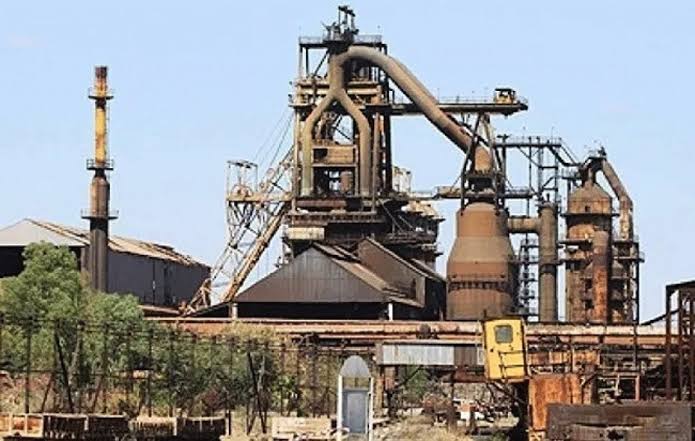
The figure highlights the economic implications of continued dependence on foreign steel despite Nigeria’s substantial steel resources and the presence of the Ajaokuta Steel Complex in Kogi State, which has remained largely inactive for more than four decades.
Steel is considered a critical component of industrialisation, with applications spanning manufacturing, construction, transportation, infrastructure, defence and other strategic areas.
NBS figures indicate that Nigeria’s iron and steel imports averaged approximately N526 billion annually over the six years preceding 2025. Last year, however, the import bill rose beyond the N1 trillion mark.
The official data covers recorded trade and may exclude imports that are unrecorded or under-reported. This means the country’s actual dependence on foreign steel could be greater than reflected in the published figures.
Minister of Steel Development, Prince Shuaibu Abubakar Audu, has placed the annual expenditure considerably higher, estimating that Nigeria spends about $4 billion, equivalent to roughly N5.6 trillion, on iron and steel imports each year.
The scale of the imports has renewed attention on the Ajaokuta Steel Complex, which was originally conceived as an integrated metallurgical facility capable of producing up to 5.2 million tonnes of liquid and finished steel products annually.
The planned output included heavy plates, flat sheets, wire rods, bars, structural shapes and industrial chemical by-products. The facility was also designed with markets outside Nigeria in mind, including supplies to West African countries and, eventually, other African markets.
A fully operational Ajaokuta complex could support Nigeria’s industrialisation by providing locally produced steel to manufacturers and downstream industries.
Analysts have maintained that the facility could generate hundreds of thousands of direct jobs and millions of indirect jobs in areas including mining, engineering, manufacturing, construction and transportation, as well as related sectors.
Developing a functioning domestic steel industry could also help lower the nation’s import expenditure, preserve foreign exchange and open up avenues for export earnings. Local steel production would further provide essential inputs for automobile manufacturing, road and rail projects, housing, machinery, fabrication and other industrial activities.
Speaking to Financial Vanguard about the condition of Nigeria’s steel industry, President of the National Association of Steel Workers, Oyabugbe Sunday, said Nigeria remains caught in a cycle of exporting raw materials and buying back finished steel products at significantly higher costs.
He said the pattern restricts domestic value addition, weakens industrialisation and poses a challenge to sustainable economic growth.
Oyabugbe also said the country spends several billions of dollars each year importing iron and steel products, creating substantial foreign exchange outflows.
He noted that industry estimates place Nigeria’s annual steel import bill at about $4 billion, although the amount varies according to import volumes and international steel prices.
On the resources needed to restore Ajaokuta to operation, Oyabugbe said the company’s last audit reportedly found the project to be about 95 per cent complete. He added that approximately $1.5 billion would be required to make the complex operational.
Efforts to bring Ajaokuta back to life through private-sector concessions have yielded limited results over the years. Several arrangements entered into under successive administrations have ended amid failure, controversy and legal disputes.
During the administration of former President Olusegun Obasanjo, the Federal Government made a significant attempt to revive the complex through a concession.
In June 2003, the government entered into a 10-year concession agreement with SOLGAS Energy Limited, an American company, for the rehabilitation, completion, commissioning and operation of Ajaokuta.
The arrangement did not produce the anticipated outcome, leading the Federal Government to terminate the concession in 2004 on the grounds of non-performance.
The SOLGAS deal had also raised concerns among experts, who questioned whether the company possessed the technical capacity necessary to undertake a project of Ajaokuta’s metallurgical complexity.
After the SOLGAS arrangement failed, the government subsequently turned to Global Infrastructure Nigeria Limited (GINL), which was associated with Indian steel magnate Pramod Mittal’s Global Steel Holdings.
Nigeria’s continued dependence on imported steel, decades after Ajaokuta was envisioned as the cornerstone of an integrated domestic steel industry, has consequently brought fresh attention to the question of what is required to make the complex commercially operational.
For Africa’s largest economy, the challenge extends beyond restoring one industrial facility. A functioning steel industry could strengthen domestic manufacturing, deepen industrial value chains, create employment and reduce the foreign exchange needed to satisfy Nigeria’s rising demand for steel.
Source: msme Africa online
Do you want to share your impact stories or pitch the coverage of your CSR event to us? E-mail: editor@impactwatch.net or *Phone +234-806-795-0250 (Whatsapp &Text)


