

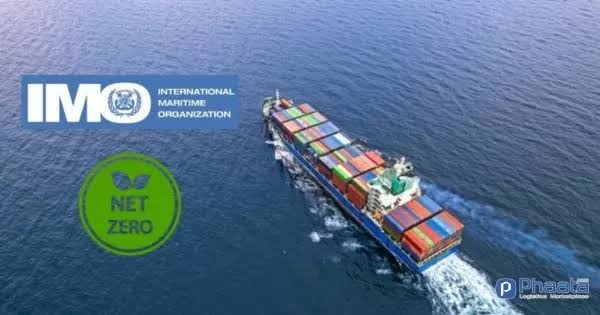
Environmental organisations are calling on member states of the International Maritime Organization (IMO), including African countries, to support the adoption of its proposed Net-Zero Framework for international shipping as negotiations resume at the end of November.
The Clean Shipping Coalition appealed on 16 November, ahead of the IMO’s 85th session of the Marine Environment Protection Committee (MEPC 85), which is scheduled to take place in London from 30 November to 3 December 2026. The Committee may also resume its second extraordinary session on 4 December.
The meeting is expected to move discussions forward on the proposed framework, which received approval in principle in April 2025. However, disagreements among member states led to the postponement of its formal adoption.
The framework proposes legally binding measures to cut greenhouse gas emissions from international shipping through a global fuel standard and an emissions-pricing system. It is part of the IMO’s 2023 greenhouse gas strategy, which aims to achieve net-zero emissions from international shipping by or around 2050.
The strategy also sets interim targets against 2008 emissions levels: a reduction of at least 20%, with efforts to reach 30%, by 2030; and at least 70%, with efforts to reach 80%, by 2040.
The Clean Shipping Coalition wants member states to adopt the framework in its existing form, arguing that it represents a negotiated compromise between governments and provides a shared regulatory approach for an industry operating across international jurisdictions.
Lukas Leppert, president of the Clean Shipping Coalition, said the proposal reflects years of negotiations and the findings of the IMO’s Comprehensive Impact Assessment. He urged member states to proceed with adoption instead of reopening negotiations on the agreement.
The framework was approved at MEPC 83 in April 2025 as draft amendments to Annex VI of the International Convention for the Prevention of Pollution from Ships, widely known as MARPOL. Its provisions would require ships to gradually lower the greenhouse gas intensity of the fuels they consume, while introducing financial penalties for emissions above specified limits.
Under the proposed fuel standard, ship operators would have to reduce the greenhouse gas intensity of marine energy over time. The emissions-pricing mechanism would require contributions based on emissions, creating financial incentives to switch to cleaner fuels and technologies. The revenue generated is intended to help finance the transition.
The proposal also includes plans for an IMO Net-Zero Fund. The fund would support innovation, research, infrastructure, training, technology transfer and capacity-building, including initiatives to address the effects of the transition on vulnerable countries.
Formal adoption was initially scheduled for October 2025 at the IMO’s second extraordinary MEPC session. However, member states agreed to adjourn the session for one year following disagreements over the proposed measures, pushing the decision into 2026.
The postponement followed pressure from several countries, including the United States and Saudi Arabia. Disputes centred on the framework’s economic implications, emissions pricing and the regulatory approach to reducing emissions from maritime transport.
At MEPC 84, held from 27 April to 1 May 2026, the Committee agreed to continue discussions between formal sessions to address outstanding concerns and build wider agreement before the next meeting. Two working group sessions were scheduled during the year, including one immediately before MEPC 85.
According to the Clean Shipping Coalition, alternative proposals considered since the postponement have not demonstrated comparable emissions-reduction potential or attracted enough support to replace the existing framework. The organisation is therefore urging countries that previously backed the agreement to maintain their positions as negotiations restart.
The appeal also brings African countries into a wider debate over how international climate regulations can reduce emissions while accounting for the economic and development priorities of nations dependent on maritime trade. Nigeria and other African IMO members could influence discussions, particularly on how transition costs are shared, how financing is structured and what implementation assistance is provided.
Shipping plays a significant role in African economies, supporting trade in petroleum products, agricultural commodities, manufactured goods and other exports. New fuel requirements and emissions charges could have implications for freight costs, supply chains, port activities and the competitiveness of traded products.
The scale of these effects will depend on the final rules, access to alternative fuels and supporting infrastructure, as well as the financial and technical assistance available to countries with fewer resources.
For developing economies, the proposed funding and technical support arrangements are therefore an important part of the negotiations. The IMO’s 2023 greenhouse gas strategy recognises that least developed countries and small island developing states could encounter particular difficulties in implementing maritime decarbonisation measures. The organisation has also established technical cooperation and capacity-building programmes to assist these countries.
The renewed push for adoption comes amid broader international climate discussions. UN Secretary-General António Guterres has called for faster action to move away from fossil fuels. Speaking at the COP31 Leaders’ Summit on 11 November, he urged governments to accelerate a just transition away from fossil fuels, adding to calls for action across sectors with high energy demands.
International shipping is estimated to account for between 2% and 3% of global greenhouse gas emissions. Its international operations make emissions reduction particularly challenging through national climate policies alone. Ships travel across international waters and jurisdictions, making the IMO’s regulatory framework central to setting common emissions requirements for the global fleet.
MEPC 85 is expected to review the findings of the intersessional working group discussions alongside submissions from member states, with the aim of building agreement on the proposed mid-term greenhouse gas reduction measures.
The outcome of the December meeting will indicate whether member states are ready to advance the framework from negotiated draft amendments to formal adoption or whether continuing disagreements will further delay a common international regulatory approach to shipping emissions.
Source: Africa Sustainability Matters
Do you want to share your impact stories or pitch the coverage of your CSR event to us? E-mail: editor@impactwatch.net or *Phone +234-806-795-0250 (Whatsapp &Text)


