

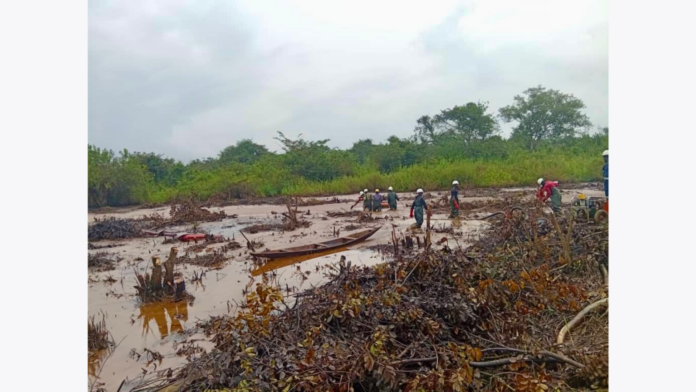
Professor Babatunde Bada of the Federal University of Agriculture, Abeokuta (FUNAAB), Ogun State, has called for greater adoption of green technology, waste recycling, tree planting and contaminated land restoration to address environmental degradation and promote sustainability.
Bada made the recommendations while delivering the institution’s 116th Inaugural Lecture, titled “Harnessing Green Technology for a Sustainable Future Environment.”
He explained that although human activities remain major contributors to environmental pollution, scientific research, technological innovation and nature-based solutions could turn environmental challenges into opportunities for ecological restoration and sustainable development.
The professor identified vehicular emissions, oil spills, mining, quarrying, improper waste disposal, poultry operations and cement production as significant sources of pollution. He warned that hazardous substances, particularly heavy metals and greenhouse gases, continued to compromise soil, water and air quality.
To address these challenges, Bada recommended improved sanitation practices, responsible waste management, reduced industrial emissions and widespread tree planting. He specifically identified mango, white teak and masquerade trees as suitable options for absorbing carbon and improving air quality.
He also advocated a shift towards treating waste as a valuable resource rather than an unwanted material. According to him, market refuse, animal dung and agricultural residues could be processed into useful inputs for agriculture, energy production and industrial applications.
He explained that composting organic waste could help rehabilitate degraded soils, improve fertility and provide essential nutrients for crop development, while reducing reliance on inorganic fertilisers.
On the use of plants to clean contaminated environments, the inaugural lecturer identified kenaf as a promising crop for removing petroleum hydrocarbons and heavy metals from polluted soils. The metals highlighted included cadmium, lead, copper, chromium and zinc.
Bada disclosed that cattle dung, pig dung and composted market waste had recorded up to 99.99 per cent removal efficiency of total petroleum hydrocarbons from oil-contaminated soils. He cited the findings as evidence of the potential of organic materials in providing affordable solutions for environmental rehabilitation.
The professor further highlighted opportunities for converting agricultural and industrial residues into commercially useful products. He noted that corn sheaths and pineapple crowns could be processed as raw materials for paper manufacturing.
He also identified recycled Polyethylene Terephthalate (PET) plastics as potential materials for asphalt production, explaining that their incorporation could improve asphalt properties while providing another productive use for plastic waste.
Another approach he recommended involved combining animal waste with palm oil mill effluent in biodigesters. He explained that the process could generate biogas for energy production and nutrient-rich slurry for use as fertiliser, while reducing waste volumes and greenhouse gas emissions.
Addressing environmental regulation, Bada urged the National Environmental Standards and Regulations Enforcement Agency (NESREA), state environmental protection agencies and local governments to strengthen the enforcement of existing environmental laws.
He identified waste disposal, vehicular emissions, industrial effluents and mining activities as areas requiring stricter regulatory oversight. He also maintained that industries, transport operators and other waste generators should be responsible for financing the management and remediation of pollution caused by their operations.
The don called for increased cooperation among government ministries, universities, industries and host communities to develop green spaces, establish tree-planting corridors and provide designated waste collection points in markets, residential estates and along major roads.
For the rehabilitation of contaminated land, he recommended the deployment of the Cuba 108 variety of kenaf alongside other suitable varieties to restore soils affected by petroleum hydrocarbons and heavy metals.
He further appealed to the Governing Board of the National Oil Spill Detection and Response Agency (NOSDRA) to integrate effective organic waste-based remediation methods into the guidelines governing oil companies.
On measures to prevent groundwater contamination and protect public health, Bada recommended maintaining a minimum separation distance of 50 metres between dumpsites, septic tanks and hand-dug wells.
He also urged state environmental protection agencies to establish routine groundwater monitoring around municipal dumpsites to reduce the risk of water contamination.
The inaugural lecturer called on the Federal Government, State Governments, Non-Governmental Organisations and the Tertiary Education Trust Fund (TETFund) to increase funding for research, innovation and the commercialisation of green technologies.
He particularly highlighted bioremediation, waste recycling and climate-smart agriculture as areas requiring greater institutional support.
Bada also encouraged universities to strengthen partnerships with industries, local communities and relevant government agencies to convert research findings into practical solutions that could be implemented on a wider scale.
According to him, such collaboration could support job creation, safeguard public health and protect the environment for future generations.
Earlier, during his introductory remarks, FUNAAB Vice-Chancellor, Professor Babatunde Kehinde, underscored the importance of research and innovation in finding solutions to environmental problems.
He commended Bada for his expertise in environmental management and acknowledged his contributions to enhancing the university’s visibility and reputation both locally and internationally.
SOURCE:The Guardian
Do you want to share your impact stories or pitch the coverage of your CSR event to us? E-mail: editor@impactwatch.net or *Phone +234-806-795-0250 (Whatsapp &Text)


