

Nigeria must change its approach to climate adaptation financing and begin treating it as an investment opportunity rather than an expense if it hopes to mobilise the N18.3 trillion required under its National Adaptation Plan (NAP) by 2050.
Experts at a stakeholder dialogue in Abuja stressed that investing in climate resilience offers significant economic returns. According to the NAP, every N1 invested in adaptation is expected to generate a return of at least N2.30 kobo. They argued that this potential makes climate adaptation an economic opportunity that should attract greater investment, rather than being approached solely as an environmental challenge.
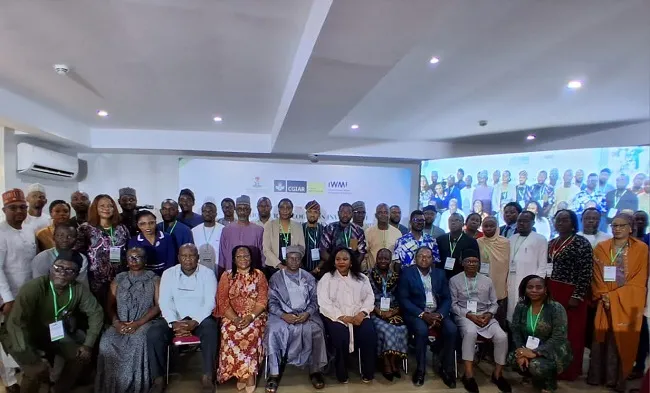
The stakeholder dialogue on Investment and Partnership for Implementing Sectoral Priorities of Nigeria’s National Adaptation Plan was organised by the Federal Ministry of Environment in Abuja, Nigeria’s capital.
Speaking at the event on Tuesday, November 3, 2026, the Permanent Secretary of the Federal Ministry of Environment, Dr. Salihu Usman, said attracting investors and financing institutions would require clear policies, effective institutional coordination, predictable processes and confidence in the successful execution of proposed projects.
In his keynote address, Usman emphasised the importance of ensuring that adaptation financing reaches communities and populations most exposed to climate-related risks.
“Government must continue to strengthen the relevant policy, regulatory and institutional frameworks while ensuring that adaptation investments are transparent, accountable and responsive to national development priorities,” he stated.
He described climate adaptation as a development priority for Nigeria, noting its far-reaching implications for economic stability, food security, poverty reduction, infrastructure planning and the welfare of current and future generations.
Usman also highlighted the significance of the dialogue’s theme, “From Adaptation Planning to Climate Resilience Action: Strengthening Implementation, Investment and Partnerships for Nigeria’s National Adaptation Plan,” saying it addresses a major challenge in climate action: translating existing policies and identified priorities into properly financed, coordinated and measurable interventions.
He called for climate adaptation objectives to become an integral part of development planning at both national and subnational levels. According to him, building climate resilience should not be treated as an isolated responsibility of environmental institutions.
“It must inform decisions in agriculture, water resources, health, transport, energy, housing, urban development and other sectors exposed to climate risks,” he added.
Although acknowledging the scale of the work ahead, the Permanent Secretary said the challenge also provides an opportunity to advance sustainable development while protecting Nigerians and strengthening the economy against climate threats.
“Every well-designed adaptation investment has the potential to reduce future losses, protect livelihoods, strengthen essential services and support a more resilient development pathway,” the PS submitted.
Also speaking, the Director of the Department of Climate Change (DCC) at the Federal Ministry of Environment, Dr. Iniobong Abiola-Awe, encouraged participants to identify ways of converting selected adaptation priorities into practical, clearly defined projects capable of attracting investment.
She stressed the need to examine institutional structures, supportive regulations and coordination arrangements required to attract funding and ensure that investments deliver meaningful, lasting results.
Abiola-Awe described the National Adaptation Plan as an important instrument for aligning Nigeria’s climate adaptation priorities and guiding efforts towards a climate-resilient future. However, she noted that its success would depend on the effective implementation and financing of its objectives, as well as their integration into sectoral and subnational development plans.
The DCC director acknowledged that government efforts alone would not be sufficient to achieve the country’s adaptation objectives. She therefore called on private sector organisations and development partners to collaborate with the ministry in addressing climate change impacts on Nigeria’s economic development and peaceful human coexistence.
“While the government has a critical responsibility to provide policy direction, establish enabling frameworks, and coordinate implementation, development partners can contribute technical expertise and catalytic finance, while the private sector can support innovation, capital mobilisation, and the delivery of scalable solutions,” Dr Abiola-Awe asserts.
Dr. Charity Osei-Amponsah, Country Focal Point at the International Water Management Institute (IWMI), also described Nigeria’s National Adaptation Plan as a framework worthy of recognition, while cautioning that developing a comprehensive plan represents only the beginning of the process.
She disclosed that IWMI had produced a policy brief to make National Adaptation Plans (NAP) more accessible and easier to implement. The document brings together major climate risks, priority adaptation measures, funding requirements and potential partnership opportunities in a format designed to support decision-makers and financing institutions.
Osei-Amponsah encouraged participants to focus on three fundamental questions throughout the discussions: “First, what should we prioritise? Second, what can each of our institutions contribute? And third, how do we work together to turn priorities on paper into practical action?”
She reaffirmed IWMI’s commitment to working with the government and other stakeholders through evidence-based approaches, stakeholder engagement and policy support to address implementation difficulties and strengthen Nigeria’s climate resilience.
The dialogue brought together representatives of government agencies, development partners and private sector organisations, who shared the position that climate adaptation should be recognised as an investment and business opportunity rather than solely an environmental concern.
Participants agreed that achieving the National Adaptation Plan’s objectives would require a decisive transition from planning to implementation. They also emphasised the need to move beyond identifying priorities towards securing the funding, partnerships and institutional commitments necessary to translate the country’s adaptation ambitions into tangible results.
SOURCE: GGN Media
Do you want to share your impact stories or pitch the coverage of your CSR event to us? E-mail: editor@impactwatch.net or *Phone +234-806-795-0250 (Whatsapp &Text)


