

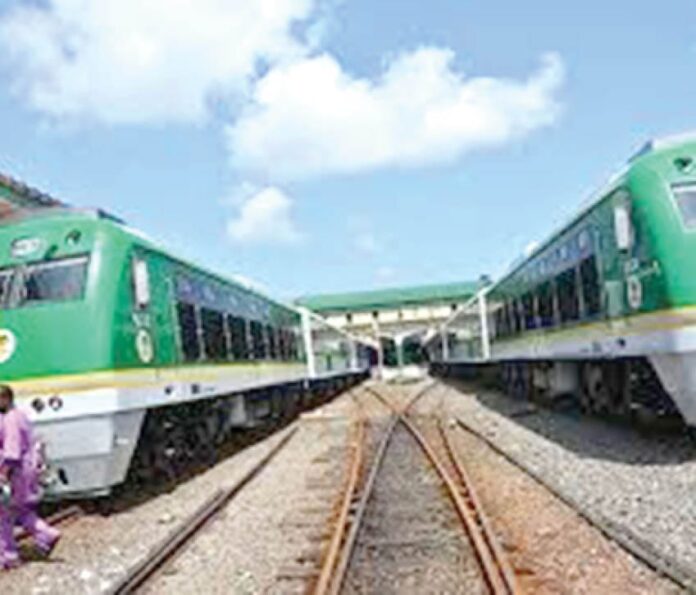
The Nigerian Railway Corporation’s (NRC) Port Harcourt-Aba train service is creating an alternative travel option for traders and small business owners in Rivers State who source merchandise from Aba’s wholesale markets and manufacturing businesses for resale.
Operating on the existing narrow-gauge railway line, the service links Port Harcourt, Rivers State, with Aba, Abia State. The train operates from Tuesday to Saturday, providing an additional transport option for people travelling between the two commercially connected cities.
Aba is one of southeastern Nigeria’s major trading and manufacturing centres. Its markets attract merchants seeking clothing, footwear, fabrics, household goods, foodstuffs and automobile spare parts for resale. Major commercial destinations include Ariaria International Market, Shopping Plaza and several other wholesale and retail markets.
The Aba Halt area, associated with Cemetery Market, is another destination for traders sourcing stockfish, food items and other merchandise.
For retailers and small business owners in Port Harcourt, access to these markets offers opportunities to replenish stock and connect with manufacturers, wholesalers and distributors. Traders purchasing goods in bulk may also consider rail as an alternative to road transport, depending on fares, journey times, operating schedules and the convenience of moving merchandise.
Port Harcourt has several commercial centres, including Oil Mill, Creek Road, Mile 1, Mile 3 and Rumuokoro, which serve traders whose supply networks extend beyond Rivers State. Dealers at Ikoku Market, known for automobile spare parts, also participate in a wider regional trading network.
The railway connection could provide another option for business operators who regularly travel to Aba to purchase goods. However, its practical value will depend on the service’s affordability and reliability, as well as the ease with which passengers can transport their purchases to and from railway stations.
Beyond commercial activities, the route also serves passengers travelling between the two cities for other purposes. Communities across Rivers State, including Eleme, Okrika, Emohua, Ahoada and parts of Ogoni, may benefit from connections through Port Harcourt. Travellers from neighbouring states may also use the service.
The route demonstrates how existing railway infrastructure can support economic activity without requiring entirely new rail lines. Reliable and convenient services can improve access to commercial centres and help businesses maintain trading relationships across state boundaries.
Under its Managing Director and Chief Executive Officer, Dr Kayode Opeifa, the NRC has emphasised better service delivery and more effective use of its existing railway assets.
For the Port Harcourt-Aba corridor, consistent schedules, accessible travel information, passenger convenience and suitable arrangements for carrying goods could determine how useful the service becomes to traders and other passengers.
There may also be scope to explore freight and logistics operations along the corridor, depending on infrastructure capacity, operational requirements and commercial demand. If viable, such services could provide an additional means of transporting goods between the two commercial centres.
Ultimately, the Port Harcourt-Aba train offers traders another way to reach manufacturers and wholesalers supplying markets across the region. Its contribution to local businesses will depend on whether it delivers a practical, reliable and cost-effective means of sourcing merchandise and reaching customers.
Source: msmeafrica
Do you want to share your impact stories or pitch the coverage of your CSR event to us? E-mail: editor@impactwatch.net or *Phone +234-806-795-0250 (Whatsapp &Text)


