

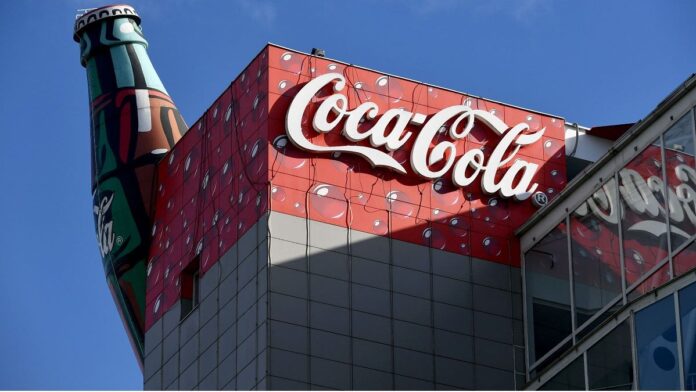
Coca-Cola is celebrating 75 years of operations in Nigeria, using the milestone to spotlight its contributions to employment, entrepreneurship, recycling, youth development and economic opportunities within communities across the country.
The Coca-Cola System in Nigeria, made up of Coca-Cola Nigeria Limited, bottling partner Nigerian Bottling Company and The Coca-Cola Foundation, said its role in the country has expanded beyond beverage production. Its activities now include initiatives aimed at supporting livelihoods, strengthening local enterprises and advancing environmental sustainability.
Among the initiatives highlighted is the Strengthening Water, Sanitation and Hygiene programme. Through the intervention, Coca-Cola rehabilitated boreholes and handwashing facilities in six communities in Maiduguri. The beneficiaries include an internally displaced persons’ camp, two health facilities and a school.
The company said the projects have enabled more than 16,000 people to gain access to safer water. The programme has also provided economic opportunities for local women employed as hygiene promoters, while young people were trained as maintenance artisans.
Coca-Cola also pointed to its environmental work in Imo State, where it said 15,000 cubic metres of riverbank vegetation along the Otamiri River was restored. The intervention is intended to help safeguard water supplies serving 25 communities, with community committees trained to oversee management of the systems.
Recycling has also formed part of the company’s sustainability efforts, particularly through opportunities created within Nigeria’s informal waste sector.
Coca-Cola said initiatives such as the Empowering Collectors Initiative, Plastics Recycling Programme (PReP), CyclePlast, Tidy Nigeria and Green Campus have enabled more than 13,000 Nigerians to generate income through the collection and aggregation of plastic waste.
The company has additionally invested in recycling infrastructure through the establishment of a Packaging Collection Hub in Apapa, Lagos. The facility can process 13,000 metric tonnes of PET bottles each year and provides support to more than 1,000 informal waste collectors and 70 aggregators.
The expansion of the recycling value chain, according to the company, also creates opportunities for small businesses and informal operators involved in waste collection, aggregation, transportation, sorting and processing.
Youth empowerment is another area highlighted by Coca-Cola as part of its work in Nigeria.
The company said its Youth Empowered programme, implemented by Nigerian Bottling Company, has reached 70,000 young Nigerians through life-skills training, entrepreneurship development and internship opportunities.
It also said the Digital Skilling and Employment Project (DSEP) and AWAMBI have collectively trained more than 130,000 young people in digital skills.
The company said such programmes are particularly relevant to Nigeria’s expanding digital economy, where practical skills can provide young people with pathways into employment, freelancing and entrepreneurship.
Healthcare is also included in the company’s community-focused interventions. Through its Safe Birth Initiative, Coca-Cola said it has supplied medical equipment to maternity and neonatal units in public hospitals and trained biomedical technicians to maintain the facilities.
According to the company, more than 43,000 mothers and newborns have benefited from the initiative.
Beyond its social and environmental programmes, Coca-Cola said its operations contribute to thousands of direct jobs and hundreds of thousands of indirect livelihoods across sectors including manufacturing, logistics, packaging, retail, transportation and recycling.
The company’s distribution system also depends significantly on indigenous entrepreneurs and retailers to deliver its products to consumers across Nigeria. This, it said, creates opportunities for businesses operating throughout its broader supply and distribution ecosystem.
As the company commemorates 75 years in Nigeria, Coca-Cola said it remains focused on increasing its impact through economic empowerment, sustainability and community development.
Under its anniversary message, “E Don Tey, We Still Dey,” the company said it would continue working to refresh lives, empower communities and build a sustainable future for generations to come.
Source: msmeafricaonline
Do you want to share your impact stories or pitch the coverage of your CSR event to us? E-mail: editor@impactwatch.net or *Phone +234-806-795-0250 (Whatsapp &Text)


