

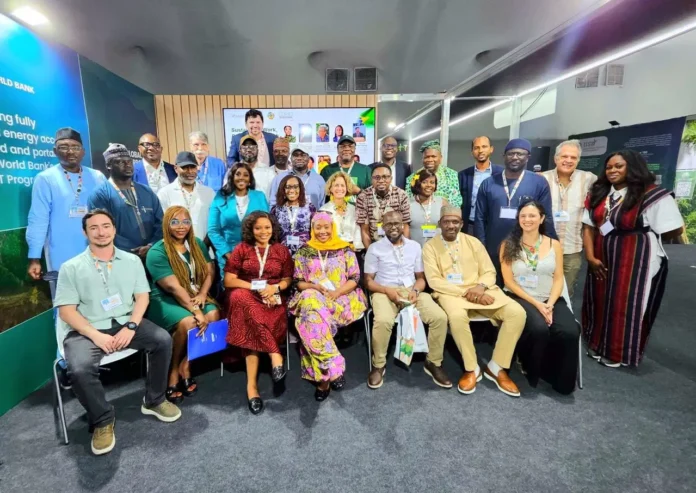
Through its Nigeria Works initiative, the organisation plans to bring together government officials, industry representatives, development finance institutions, academics and innovators to explore how climate action can generate jobs and business opportunities for Nigerians.
The engagement, themed “The Just Transition: Skills, Innovation and the Future of Work in a Net-Zero Economy,” will address green skills, climate literacy, education, entrepreneurship and evolving workforce requirements.
Vivacity said the initiative aims to help workers, entrepreneurs and businesses prepare for changes driven by artificial intelligence, automation, digital transformation and the shift towards cleaner economic activities.
The organisation noted that Nigeria’s challenge goes beyond job creation to ensuring workers have the relevant skills and practical experience needed to participate in emerging industries.
The World Economic Forum’s Future of Jobs Report 2025 projects that global labour-market changes could create 170 million jobs and displace 92 million existing positions by 2030, resulting in a net increase of 78 million jobs. Technological advances, including artificial intelligence, and the green transition are among the forces reshaping employment.
Vivacity Development’s Managing Director and Chief Executive Officer, Engr. Oluwakemi Ann-Melody Areola, said Nigerians needed to understand changing labour-market demands early enough to prepare for new opportunities.
“We need to start asking a different question. It is not only about how many jobs we can create today, but whether Nigerians are being prepared for the jobs, industries and business opportunities that will shape tomorrow’s economy,” she said.
Areola described awareness as an essential starting point, noting that people must first understand emerging opportunities before identifying the skills needed to access them.
Nigeria Works provides the framework for Vivacity’s future of work activities. Its initial focus includes raising awareness of emerging occupations, changing skills requirements and opportunities across evolving industries.
The initiative is also exploring accessible, targeted short courses to complement formal education. These would emphasise practical learning, project-based assignments and exposure to real business challenges, helping workers and businesses develop relevant capabilities and participate in changing markets.
The green economy is a central focus, with opportunities spanning renewable energy, sustainable agriculture, energy efficiency, waste management, recycling, environmental services, climate technology and sustainable infrastructure.
According to Vivacity, these sectors require a combination of technical expertise, digital capabilities, financial knowledge, project management and entrepreneurial skills.
Areola said employment and livelihoods must remain part of discussions about Nigeria’s climate transition.
“We cannot talk about the green economy only in terms of climate targets. We must also talk about livelihoods, skills, enterprise and the people who will make the transition possible,” she said.
She added that workers needed to understand the requirements of emerging industries, while businesses must develop the capacity to grow and employ people with relevant practical skills.
Vivacity said it had advanced its future of work agenda through international engagements, including Investors Connect London and events held around the United Nations General Assembly (UNGA).
In 2024, the organisation convened more than 200 stakeholders at UNGA79. It followed this with a 2025 event at UNGA80 themed “Powering Possibilities: The Future of Work Through Strategic Collaboration.”
Its latest engagement around UNGA81 focused on “Work, Innovation and Opportunity for a Youth-Led Global Economy.”
According to the organisation, these platforms have explored how collaboration among governments, businesses, development institutions and other stakeholders can expand economic opportunities.
The planned COP31 engagement will extend these discussions to the links between climate commitments, workforce development and economic diversification.
For Nigeria, key issues include improving workers’ access to jobs in emerging green industries, helping training institutions respond to employers’ changing requirements and equipping businesses to compete in new markets.
“The future of work is not something that will happen to Nigeria without warning. The shifts are already taking place, and the decisions we make now about awareness, skills and preparedness will influence how well our people and businesses respond,” Areola said.
She said Vivacity wants Nigerians to identify emerging opportunities, understand the requirements and begin preparing to participate in the changing economy.
Source: PUNCH
Do you want to share your impact stories or pitch the coverage of your CSR event to us? E-mail: editor@impactwatch.net or *Phone +234-806-795-0250 (Whatsapp &Text)


