

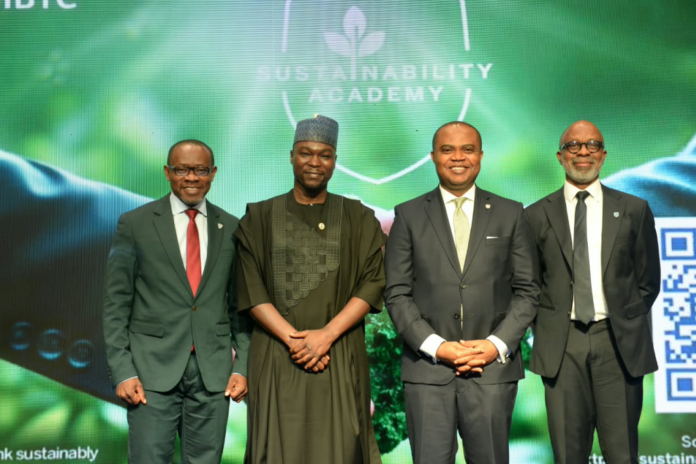
Stanbic IBTC Holdings has reaffirmed its commitment to sustainable finance with the launch of a free sustainability education programme at the third edition of its flagship Sustainable Finance hybrid summit in Lagos.
The summit, themed ‘Financing a Just Transition: Mobilising Capital for People, Policy, and Prosperity’, brought together C-suite executives, regulators, investors, sustainability professionals, policymakers, academics and technology sector representatives from Nigeria and beyond.
Speaking at the event, Stanbic IBTC Holdings Chief Executive, Chuma Nwokocha, said the summit was established to move Nigeria’s sustainable finance discussions beyond dialogue and towards practical action by connecting stakeholders who can shape the country’s sustainable finance ecosystem.
He noted that sustainable finance had moved from the margins into the mainstream, driven by stronger collaboration, wider participation and increased market awareness.
“For us at Stanbic IBTC, the conversation about sustainability is no longer about the future. Sustainability is here, it is real, and it requires action now. It is about how we allocate capital today; how we shape policy; how we bring others along on the journey; and how we build institutions capable of delivering prosperity for every Nigerian and for future generations.”
A major highlight of the summit was the official launch of the Standard Bank Sustainability Academy, an initiative designed to promote a culture of sustainability in Nigeria.
The programme will provide free, high-quality educational resources for individuals interested in sustainable practices and finance, supporting efforts to expand access to sustainability knowledge.
In his opening remarks, Professor Bongo Adi, a Professor of Economic and Business Intelligence at Lagos Business School, said Nigeria had reached a critical stage where economic growth and climate action could no longer be treated as competing priorities.
Delivering a goodwill message, the Special Adviser to the President on Climate Finance, Mallam Ibrahim Shelleng, said Nigeria had established the policy, regulatory and institutional frameworks needed to convert its climate ambitions into investment opportunities.
Source: The Sun
Do you want to share your impact stories or pitch the coverage of your CSR event to us? E-mail: editor@impactwatch.net or *Phone +234-806-795-0250 (Whatsapp &Text)


