

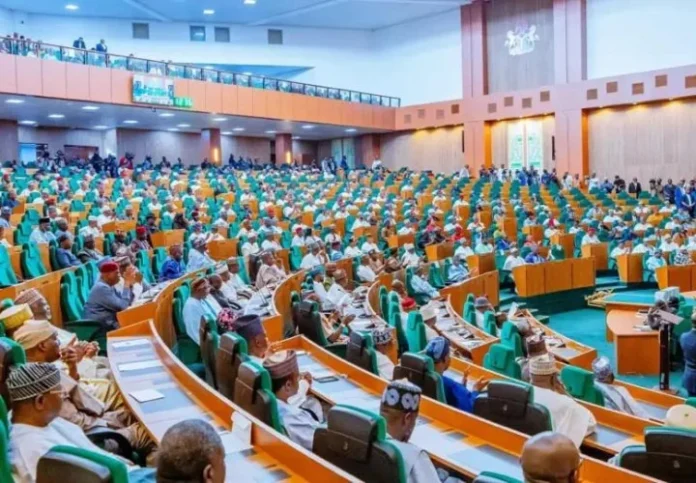
The House of Representatives Committee on the South South Development Commission has criticised what it described as the inadequate response by the Nigerian Upstream Petroleum Regulatory Commission (NUPRC) and the National Oil Spill Detection and Response Agency (NOSDRA) to the prolonged gas seepage affecting Billy Community in Degema Local Government Area of Rivers State.
During an investigative hearing held in Abuja on Thursday, lawmakers described the nearly eight-month-old incident as a serious environmental and public health emergency, raising concerns over regulatory failures and the pace of intervention.
The committee said the continuing gas seepage has polluted the air, contaminated water sources, disrupted economic activities and exposed residents to significant health and safety risks.
The investigation follows mounting concerns over the incident, which was first reported in late 2025 and has persisted despite several months of inquiries.
Residents of the riverine community have alleged that the emissions have made boreholes unsafe for use, devastated fishing and farming activities—their primary means of livelihood—and forced families to live under constant fear of fire outbreaks and other health-related dangers.
Lawmakers also expressed dissatisfaction with the absence of several major stakeholders from the hearing. Those absent included the Nigerian National Petroleum Company Limited, NNPC Exploration and Production Limited, the Rivers State Government, the state’s Ministries of Environment and Health, and the Chairman of Degema Local Government Area.
According to the committee, the absence of these institutions prevented lawmakers from obtaining explanations regarding emergency response measures, remediation efforts and actions taken to safeguard affected residents.
Chairman of the committee, Julius Pondi, said the probe was being carried out under the House’s constitutional oversight responsibilities as provided by Sections 88 and 89 of the 1999 Constitution (as amended).
He explained that the hearing aimed to establish the circumstances surrounding the gas seepage, assess the responses of regulators and industry operators, and determine its environmental, health and socio-economic consequences.
“The committee considered it necessary to invite all relevant stakeholders because of the grave environmental, public health, socio-economic and ecological implications of the incident for the people of Billy Community and the wider South-South region,”
Pondi noted that the community relies heavily on fishing, farming and other natural resource-based occupations, making the prolonged incident particularly damaging.
“As representatives of the Nigerian people, we have a duty to ensure that operators in the oil and gas industry conduct their activities in accordance with extant laws, government regulations and international best practices, while ensuring that host communities are adequately protected from avoidable environmental and safety hazards,”
He added that the committee intended to identify both the immediate and underlying causes of the incident, evaluate emergency response and remediation efforts, and examine the broader impact on the community.
“I wish to emphasise that this committee approaches this engagement with an open mind. Our objective is neither to prejudge any individual or institution nor apportion blame without due process.
“Rather, we seek to establish the facts, identify operational or regulatory shortcomings where they exist, and make practical recommendations that will strengthen environmental governance and improve regulatory oversight,”
The hearing became more intense as lawmakers questioned why the incident remained unresolved months after it was first reported.
Representing NOSDRA Director-General and Chief Executive Officer, Engr Chukwuemeka Woke, Mr Cytrus Nkangwung told lawmakers that the agency officially received notification of the gas seepage on November 25, 2025, following initial reports of gas bubbling the previous month.
He explained that the incident differed from a conventional oil spill because the gas was naturally emerging from the ground and water sources instead of leaking from known petroleum facilities.
NOSDRA’s Zonal Head, Mr Augustine Bello, told the committee:
“This incident is not the regular incident that attracts reporting. It is not a leak from any facility. It is gas bubbling that enveloped the community. When we became aware of it, we reached out to stakeholders within the community. It is different from a conventional oil spill.”
The explanation failed to satisfy members of the committee.
Chairman of the House Committee on Host Communities, Robinson Dekor, criticised regulators for failing to identify the source of the seepage after several months of investigations.
“I feel sad sitting here listening to what you are telling us today. Gas is bubbling from the ground, and after all these months, you are still telling us you do not know the cause.
“Today is a black day in the history of Nigeria that people’s lives could be on the line for this number of months and nothing has been done about it. You sit here suggesting to us that you do not even know what is responsible for it.
“It is a huge shame that people’s lives are at risk. Do you know how many people have died? Their livelihoods have been destroyed, yet nobody seems to care,”
Lawmakers also questioned why residents had not received emergency relief despite continued exposure to polluted air and contaminated water.
“What happened to the people of Billy?”
Pondi asked, questioning why affected residents had continued to bear the burden of the crisis while investigations remained ongoing.
Dekor further urged the committee to compel all absent operators and government agencies to appear before lawmakers.
“I want to suggest that we compel all these agencies to appear before this committee. Something must be done. People should not die simply because they live in oil-producing communities,”
The committee also sought explanations from NOSDRA regarding its request for a N3.4 billion presidential intervention fund while investigations were still in progress.
Responding, Bello said the proposed funding would support emergency containment measures, environmental assessments and humanitarian interventions pending the outcome of scientific investigations.
Responding to lawmakers, NUPRC maintained that available evidence had not linked the gas seepage to any existing oil and gas infrastructure.
Leader of the commission’s delegation and Director of Development and Production, Joseph Ogunsola, said preliminary scientific findings suggested the gas was naturally migrating from deep underground formations through groundwater pathways and boreholes.
“The result of our evaluation indicates that there is no relationship between any pipeline or facility and the character of the gas seepage. Scientific evidence available to us presently points to a subsurface occurrence rather than a failure of surface infrastructure,”
Ogunsola acknowledged the severity of the impact on residents.
“Billy Community is severely affected. The water is contaminated; there are reports of air pollution and there are safety concerns.”
He disclosed that the commission had adopted a two-pronged strategy combining scientific investigations with humanitarian assistance.
According to him, relief materials had already been delivered through an industry-supported initiative, while medical outreach services and access to safe drinking water were expected to begin within two weeks.
“The Commission Chief Executive mobilised the industry because no operator has been found culpable. Nevertheless, we agreed that the industry must rally round and support the people of Billy while investigations continue.
“There is also a planned medical outreach in the next two weeks, while hydrological studies are ongoing to determine how best to provide uncontaminated potable water to the community,”
Addressing the possibility of relocating affected residents, Ogunsola said the commission had advised relevant authorities to consider a managed evacuation based on expert health and safety assessments.
“We cannot today determine the full extent of the impact of this seepage. Laboratory analysis shows there are gases that should not ordinarily be inhaled. Government should therefore consider managed evacuation of the affected residents following an appropriate health and risk assessment,”
Despite these explanations, lawmakers maintained that the prolonged crisis highlighted serious weaknesses in environmental regulation and emergency response mechanisms.
The committee directed all absent operators and relevant government agencies to appear at its next hearing, warning that ongoing scientific investigations should not delay urgent interventions needed to protect affected communities.
First reported in late 2025, the Billy gas seepage remains one of the most unusual environmental incidents recorded in Nigeria’s oil-producing Niger Delta. Unlike conventional oil spills associated with damaged pipelines or failed petroleum facilities, preliminary investigations indicate the gas is naturally migrating from deep underground formations rather than existing oil and gas infrastructure.
While scientific studies continue, the incident has intensified concerns about environmental protection, public health and regulatory preparedness in Nigeria’s petroleum-producing communities, with lawmakers insisting that immediate relief measures and stronger regulatory oversight are essential for protecting residents and restoring public confidence.
Source: Punch
Do you want to share your impact stories or pitch the coverage of your CSR event to us? E-mail: editor@impactwatch.net or *Phone +234-806-795-0250 (Whatsapp &Text)


