

Energy experts have urged the Federal Government to attract a share of the United Arab Emirates’ investments in Sub-Saharan Africa to upgrade Nigeria’s electricity infrastructure and improve power supply.
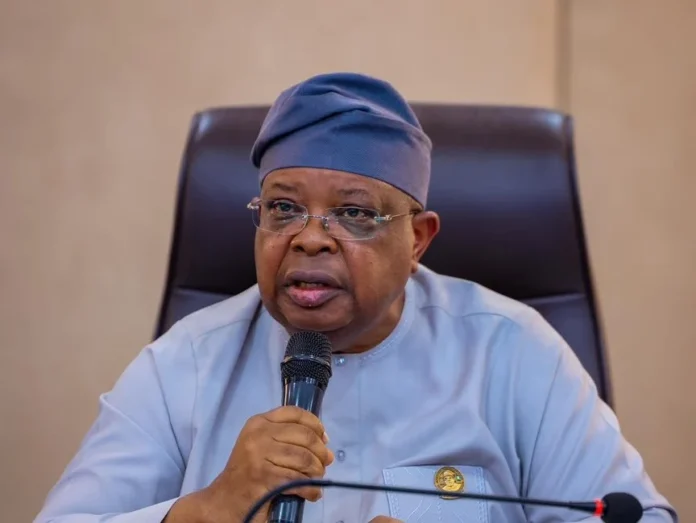
The call followed Nigeria’s participation in Middle East Energy 2026 in Dubai, where Minister of Power Joseph Tegbe highlighted the country’s commitment to developing infrastructure to strengthen energy security.
The UAE has identified renewable energy, infrastructure and digital innovation as priority areas for long-term investment and sustainable development across Africa.
In August, UAE Minister of State Saeed bin Mubarak Al Hajeri said the country invested about $71.32bn in Sub-Saharan Africa between 2021 and 2025. He also disclosed that the UAE had committed more than $70bn to renewable and green energy projects across the continent through initiatives including Masdar’s $10bn programme and the Etihad 7 platform.
Reacting to the figures, the National Secretary of the Network for Electricity Consumers Advocacy of Nigeria, Uket Obonga, said Nigeria should pursue funding from the UAE to address its electricity infrastructure needs.
“So, should the government actually look at attracting part of that fund to Nigeria? Certainly, that could be one reason for the minister’s visit. The minister should be looking at whether we can attract part of that $70bn to Nigeria,” Obonga said.
He suggested that Nigeria target about 10 per cent of the investment, equivalent to approximately $7bn. He said the funding could significantly improve electricity infrastructure if deployed effectively.
“If Nigeria is given about 10 per cent of that money, that would be about $7bn. If Nigeria gets about $7bn and half of that money is invested in the grid network, it will go a long way towards addressing the problem,” he said.
Obonga said the money could support upgrades to existing distribution networks and the national grid, expand infrastructure and replace obsolete equipment, including meters and other distribution components.
He also called on the Federal Government and the power minister to explain publicly what funding they were seeking and how any investment secured from the UAE would be spent.
“But the government and the minister should come out clearly and let Nigerians know what is happening when they do that, so that we can understand where the money is going and what it is intended to achieve,” Obonga said.
At Middle East Energy 2026, Tegbe stressed that strengthening Nigeria’s energy security would require investment in infrastructure, institutions and international partnerships.
“Storms we cannot forecast will come, but history teaches that energy security has never been won by those who retreated behind their borders. It has been won by those who built grids, pipelines, ports, institutions, and above all, trust. Nigeria has chosen to build. Africa has chosen to build,” Tegbe said.
UAE Minister of Energy and Infrastructure Suhail bin Mohammed Al Mazrouei also called for stronger cooperation among governments, industry players, investors, technology companies and financial institutions.
He emphasised electricity interconnectivity as a key investment area for strengthening energy security and facilitating the movement of cleaner energy across national borders.
The discussions come as the UAE expands its economic engagement with Africa. Al Hajeri said investments in infrastructure and logistics were being advanced through DP World, AD Ports Group and funding from the Abu Dhabi Fund for Development.
He said the investments were expected to improve transport networks, lower business costs, expand electricity access, create jobs and encourage technology and skills transfer across African countries.
“Our investments are not just balance-sheet numbers. They translate into infrastructure that lowers the cost of doing business, clean power reaching homes, schools and businesses, new jobs, investment flowing into local industries, and the transfer of technology and skills to support long-term growth,” Al Hajeri said.
Meanwhile, PowerUp Convener Adetayo Adegbemle urged the Federal Government to prioritise national grid improvements and encourage industrial consumers to reconnect to the electricity network.
He explained that the grid was designed to transmit large volumes of electricity over long distances at low cost. However, the departure of heavy electricity users had increased the cost burden on other consumers.
“Now, part of the reasons why our grid power supply is becoming more expensive is because all the heavy lifters, heavy users that are supposed to pay or subsidise other smaller consumers, are no longer on the grid,” he noted.
Adegbemle said the government needed measures to encourage manufacturers to return to the grid while tackling the rising cost of electricity.
The three-day Middle East Energy 2026 event attracted more than 1,500 exhibitors and participants from over 120 countries. Discussions covered power generation, renewable energy, electricity grids, storage, digitalisation and energy security.
Nigeria’s participation offered an opportunity to present its electricity infrastructure needs to international investors, technology companies and energy businesses.
SOURCE: The PUNCH
Do you want to share your impact stories or pitch the coverage of your CSR event to us? E-mail: editor@impactwatch.net or *Phone +234-806-795-0250 (Whatsapp &Text)


