

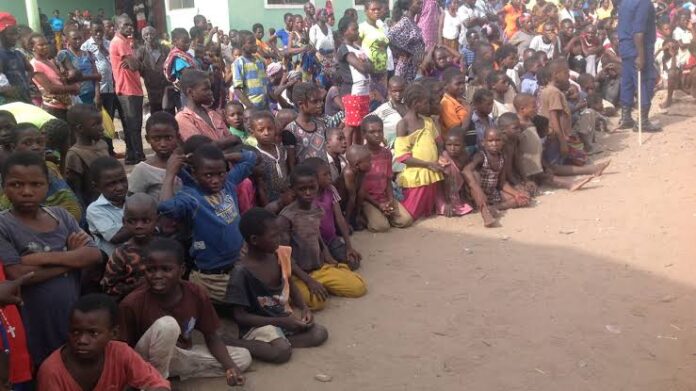
The Federal Government is intensifying efforts to enrol 5.5 million out-of-school children from nomadic communities across Nigeria through the National Commission for Nomadic Education (NCNE).
The acting Executive Secretary of the commission, Umar Ardo, disclosed this on Wednesday in Kano during an interview on the sidelines of the International Conference on Nomadic and Alternative Education Approaches in Africa.
The conference, themed “Strengthening Inclusive and Flexible Education Pathways for Nomadic Pastoralists and Marginalised Learners in Africa,” was organised by the Maryam Abacha American University of Nigeria (MAAUN), Kano, in partnership with the Catholic University of East Africa (CUEA), Kenya, Capital University of Somalia and the University of Namibia.
Ardo explained that nomadic education covers three beneficiary groups: nomadic pastoralists, migrant fishers and migrant farmers.
“When we are talking about nomadic education, the target beneficiaries are three groups. What constitutes a nomad is a nomadic pastoralist, migrant fisher and migrant farmer,” he said.
According to him, these groups have a combined population of 45.9 million across Nigeria’s 36 states and the Federal Capital Territory (FCT), Abuja, with approximately 5.5 million children currently out of school.
He noted that although the programme began in 1989 with a focus on nomadic pastoralists, its coverage has since expanded to include migrant fishers and farmers.
“So, at the moment, the enrolment is not less than 1.9 million learners across the federation. We also have graduates over the years,” he said.
Ardo said the commission had introduced different implementation strategies to address insecurity and other emerging challenges affecting access to education among the target communities.
Beyond conventional schooling, the NCNE has developed alternative learning arrangements to reach children in hard-to-access nomadic settlements.
“We have different types of schools under the system. We have schools under sheds, we have mobile schools, and we have gone further in terms of technology, particularly using radio to deliver lessons,” he said.
The acting executive secretary also disclosed that the commission had recently adopted the Accelerated Basic Education Programme to accommodate out-of-school youths within nomadic communities.
“We are implementing it for the nomads to create more access and ensure quality, particularly through skills acquisition programmes.
“So, we have established skills acquisition centres to provide more opportunities for the nomads apart from their traditional method to improve their livelihoods,” he said.
SOURCE:Peoples Gazette
Do you want to share your impact stories or pitch the coverage of your CSR event to us? E-mail: editor@impactwatch.net or *Phone +234-806-795-0250 (Whatsapp &Text)


