

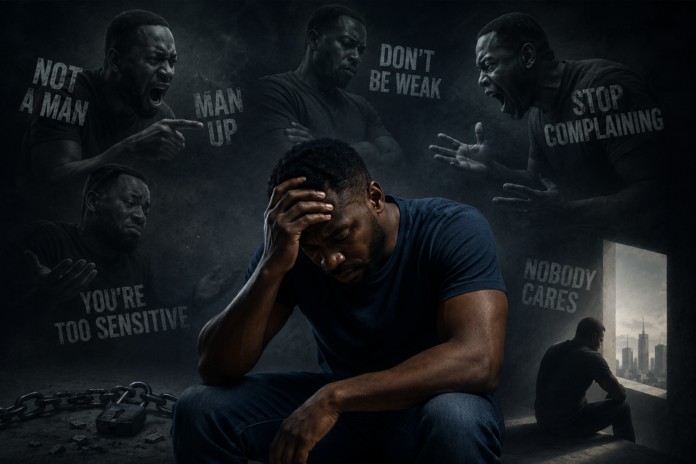
A Professor of Behavioural Medicine at the Lagos State University College of Medicine (LASUCOM), Ikeja, Ayodele Coker, has identified emotional abuse from spouses, poverty, alcohol and substance abuse, as well as mounting social and financial pressures, as major contributors to the growing burden of mental disorders among Nigerian men.
The professor of psychiatry explained that many men also increase their vulnerability to mental health conditions by suppressing their emotions instead of discussing the challenges they face at work, at home, and in society. He urged men to openly express their feelings and seek support rather than remain silent.
Coker observed that although many men are attentive to their physical health, they frequently overlook their mental well-being. He noted that mental health extends beyond the absence of illness, describing it as the capacity to fulfil one’s potential, manage everyday stress, remain productive, and sustain healthy social relationships.
According to the behavioural medicine expert, several additional factorincluding physical illness, social isolation, traumatic experiences, and an inability to cope with life’s pressures, also contribute significantly to mental health disorders among Nigerian men.
“In Nigeria, the risk factors for having mental disorders among men are emotional abuse from their spouses, poverty, alcohol and cannabis substance use, pain from physical and mental disorders, isolation for those who cannot have social wellness, and also inability to cope with stressors of life,” he stated.
Coker further explained that many men are reluctant to seek professional or emotional support, a pattern that often results in unhealthy coping mechanisms, including suicide.
“We have to talk about men’s mental health because men don’t speak out about what they are going through. They tend to repress their emotions. They tend to deny their emotions. They experience a lot of stressors at work, home, on the streets, and they are supposed to cope.”
The psychiatrist also pointed to statistics indicating that between 80 and 90 per cent of prison inmates and individuals who have committed homicide are men. He added that the majority of homeless people and street urchins are also male.
Supporting the concerns, the Mental Health Coalition estimates that six million men experience depression every year. The organisation lists common warning signs as fatigue, irritability, loss of interest or pleasure in work and hobbies, changes in eating or sleeping habits, and feelings of numbness or hopelessness.
Similarly, the National Alliance on Mental Illness reports that men are nearly four times more likely than women to die by suicide.
The concerns raised by the professor align with a recent PUNCH Healthwise report, which highlighted how Nigeria’s economic realities and societal expectations are fuelling a mental health crisis among fathers struggling to provide for their families.
Coker said difficult life experiences including , bereavement, unemployment, and financial hardship, further increase men’s susceptibility to mental health conditions.
“These days, most men cannot afford to put fuel in their vehicles. The family, the spouse, they are not kind to men who have lost their jobs or men who don’t have financial abilities. That’s another risk factor,” he said, noting that worsening economic conditions have intensified stress among many men.
He added that financial struggles often produce behavioural changes that relatives and loved ones frequently misinterpret.
“When they start to manifest with signs and symptoms of mental disorders like irritability, anger, their spouses and their family members will not understand the reason,” the professor said.
Coker warned against relying exclusively on religious practices or substance use as ways of managing emotional distress.
“They need to be taught how to also cope with mental disorders, not just going to the church or having religious behaviours or coping with drugs by developing maladaptive behaviour,” he said.
Emphasising the importance of early intervention, the behavioural medicine specialist described open communication as one of the most effective ways to prevent mental health challenges from worsening.
While acknowledging that many men do not have trusted confidants, he encouraged them to seek support from pastors, imams, social workers, or “anybody that has a listening ear.”
“They need to speak out. That’s just it. We should not deny or repress our emotions. We need to speak out. Once we speak out, there will be solutions to whatever stress men are going through,” he added.
Coker also appealed to families to show greater understanding toward men facing unemployment and financial difficulties, stressing that poverty and job loss can significantly worsen psychological distress.
Do you want to share your impact stories or pitch the coverage of your CSR event to us? E-mail: editor@impactwatch.net or *Phone +234-806-795-0250 (Whatsapp &Text)


