

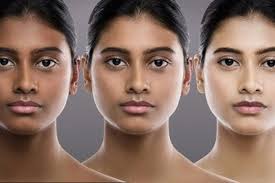
The booming cosmetics and beauty industry has seen an increasing number of skincare brands promoting products as organic and made with natural ingredients. Many entrepreneurs and skincare professionals also insist that their formulations are designed to tone the skin rather than bleach it.
However, distinguishing between skin toning and skin bleaching remains a major concern for consumers seeking healthier skincare options.
Prominent Nigerian medical aesthetician and Founder/CEO of Celeb Laser and Aesthetics Clinic, Bimbo Ige, believes the distinction should be made clear, particularly because of the potential health consequences associated with bleaching products.
According to Ige:
“Medically, bleaching creams can slip into your skin’s pores and it would affect the kidney, and other vitals. I advise my clients that there are other safer ways to lighten up their skin because, let us be fair about this; sometimes I understand that dark marks, scars, and hyperpigmentation reduce a woman’s confidence.
And as black women, we have this hyperpigmentation issue, one little fall there is a scar that would remain there for like ever. So, sometimes, you have to explain to people that you can treat that scar but you don’t have to bleach it.”
Nigeria is regarded as one of the countries with one of the highest numbers of people who engage in skin bleaching. Another expert also noted that individuals who begin bleaching their skin become more susceptible to skin cancer.
The growing concern over these health implications is one of the key reasons for increasing public awareness campaigns encouraging healthier skincare practices.
In a separate interview, Ige also addressed the use of hydroquinone, explaining that it can be safe when used within strictly controlled limits.
She noted that instructions for hydroquinone products caution users not to exceed 14% concentration over a certain period. Generally, hydroquinone concentrations between 2% and 4% are considered the safest and most effective for treating minor hyperpigmentation, sun spots and melasma.
The concentration regarded as safe depends largely on whether the product is purchased over the counter or prescribed by a medical professional.
For over-the-counter (OTC) products, concentrations of up to 2% are generally considered safe for unsupervised use. Prescription-strength hydroquinone typically ranges from 4% to 6%, and in some specially compounded formulations, concentrations can reach up to 12% for severe and stubborn skin discolouration.
These stronger formulations should only be used under the close supervision of a dermatologist or qualified skin specialist. Using concentrations beyond medically prescribed levels or applying them for extended periods is generally regarded as skin bleaching or skin whitening.
The dictionary defines skin whitening, also referred to as skin lightening or skin bleaching, as the use of chemical substances to lighten the skin or achieve a more even complexion by reducing melanin concentration.
Meanwhile, an online beauty blog differentiates between skin lightening and skin brightening by explaining that skin lightening focuses on reducing pigmentation and correcting discolouration to achieve a more even skin tone, while skin brightening is aimed at restoring the skin’s natural radiance, vibrancy and glow.
Source: New Telegraph
Do you want to share your impact stories or pitch the coverage of your CSR event to us? E-mail: editor@impactwatch.net or *Phone +234-806-795-0250 (Whatsapp &Text)


