

ActionAid Nigeria has called on federal and state governments to increase public investment in agriculture, improve sustainable production and strengthen value addition, agro-industrialisation and market access through coordinated policies and investments.
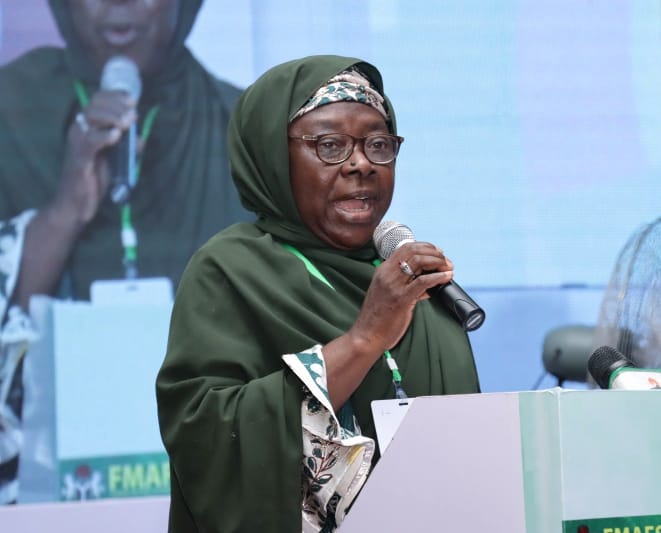
The organisation’s Deputy Country Director, Suwaiba Muhammad Dankabo, made the appeal on Thursday while addressing the 48th Regular Meeting of the National Council on Agriculture and Food Security in Enugu.
Dankabo reaffirmed ActionAid Nigeria’s commitment to collaborating with the Federal Ministry of Agriculture and Food Security, state governments, farmers’ organisations, civil society groups, development partners and private sector stakeholders to turn agricultural commitments into practical interventions and measurable outcomes.
“Our collective responsibility is to ensure that agricultural transformation is not measured only by increased production, but also by improved farmers’ incomes, decent employment, sustainable livelihoods, stronger local industries and affordable nutritious food for all Nigerians,” she said.
She also acknowledged the collective efforts of agricultural stakeholders towards sustainable transformation, particularly the development and approval of the National Agroecology Strategy (2026–2030) by the Honourable Minister of Agriculture and Food Security.
While commending the minister and the ministry for the achievement, Dankabo stressed that the strategy’s effectiveness would ultimately depend on its implementation and the benefits delivered to farmers and communities nationwide.
“While we commend the Honourable Minister and the Ministry for this important achievement, the true success of the Strategy will be measured by its implementation and the tangible benefits it delivers to farmers and communities across Nigeria,” she said.
As part of its efforts to promote effective public financing for agriculture, ActionAid Nigeria recently conducted a Business Case and Political Economy Analysis (BCPEA) examining government expenditure across four strategic agricultural value chains: rice, cassava, dairy and aquaculture.
The assessment covered the Federal Government and three states — Kano, Niger and Oyo — over five years, from 2021 to 2025.
According to Dankabo, the findings identified considerable opportunities to improve agricultural investment and generate greater economic returns.
The analysis established that approximately ₦215.7 billion was allocated to the four value chains during the review period, with the Federal Government contributing 86 per cent of the total amount.
However, average federal budgetary allocation to agriculture stood at just 2.6 per cent. The corresponding allocations in the three states ranged between 2.8 per cent and 5.8 per cent.
These figures fall considerably short of the 10 per cent target under the Maputo/Malabo and Comprehensive Africa Agriculture Development Programme (CAADP) commitments.
ActionAid’s economic modelling further indicated that optimising public investment across the four value chains could potentially increase government revenue by approximately 50 per cent at the federal level.
The projected revenue gains stood at 82 per cent in Kano, 58 per cent in Niger and 76 per cent in Oyo State.
The assessment also estimated that improved investment could generate approximately 1.23 million jobs across the three states, in addition to substantial employment opportunities at the national level.
Reacting to the findings, Dankabo said strategic agricultural investment should be viewed as an opportunity to generate public revenue, expand employment, promote agro-industrialisation and strengthen national food and nutrition security rather than simply government expenditure.
She consequently urged federal and state governments to increase agricultural budgetary allocations towards the 10 per cent CAADP commitment, ensure approved funds are released promptly and guarantee their effective utilisation.
“We, therefore, call on the Federal and State Governments to prioritise increased agricultural budgetary allocations towards the 10 per cent CAADP commitment, ensure timely release and effective utilisation of approved funds.
“There is also need to strengthen investment in critical infrastructure, including irrigation, agro-processing facilities, storage, cold-chain logistics, agricultural finance and market access,” she added.
The 48th Regular Meeting of the National Council on Agriculture and Food Security was held under the theme, “Enhancing Agricultural Value Chains, Agro-Industrialization and Market Access for Economic Growth.”
The meeting brought together sub-national, national and international stakeholders from the agriculture and agro-industrialisation sectors.
Deliberations at the gathering are expected to focus on approaches to strengthening agricultural value chains, advancing agro-industrialisation and improving market access as part of efforts to drive economic growth and enhance food security in Nigeria.
SOURCE: Naija Central
Do you want to share your impact stories or pitch the coverage of your CSR event to us? E-mail: editor@impactwatch.net or *Phone +234-806-795-0250 (Whatsapp &Text)


