

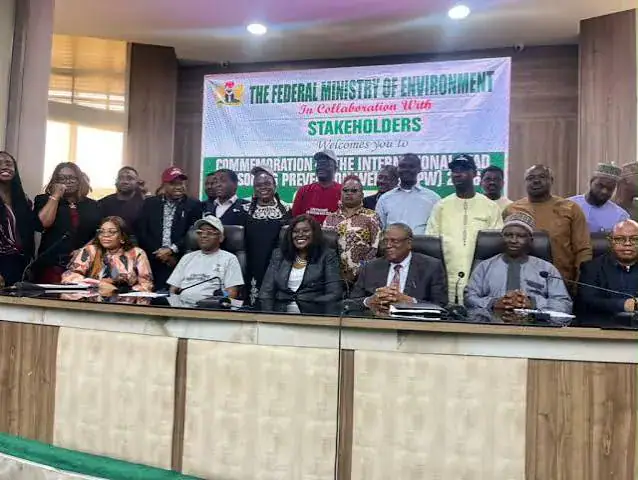
The Nigerian Federal Government has set 2030 as its target for phasing out lead-based paints, intensifying efforts to prevent lead exposure and its associated environmental and public-health risks.
The Permanent Secretary of the Federal Ministry of Environment, Dr Salihu Usman, announced the target during the 2026 International Lead Poisoning Prevention Week in Abuja. He described lead poisoning as preventable, stressing that there is no known safe level of exposure.
Dr Usman identified children, pregnant women and workers exposed to lead through their occupations as particularly vulnerable. He called for stronger collaboration among government agencies, industries, health professionals and civil society organisations to improve environmental monitoring, enforce product standards and encourage safer alternatives.
He also highlighted the National Inter-Agency Working Group on Lead Poisoning Elimination and a proposed five-year strategic plan expected to guide the phase-out process.
Similarly, the Executive Director of Sustainable Research and Action for Environment Development (SRADeV), Dr Leslie Adogame, urged stakeholders to strengthen laboratory testing, environmental surveillance and enforcement of safety standards. Referring to studies on lead-based paints and used lead-acid battery recycling, he emphasised the importance of adopting safer alternatives.
Dr Adogame commended stakeholders for their contributions towards eliminating lead exposure and noted that the annual commemoration of the event began in 2013.
The ministry’s Director of Pollution Control and Environmental Health, Mrs Omotunde Adeola, reaffirmed its commitment to achieving the 2030 target. She stressed that progress should be assessed through reduced lead exposure and the protection of lives.
She highlighted a capacity-building workshop on portable X-ray fluorescence analysers, which trained participants to screen paints and consumer products for lead content.
Adeola also disclosed that the ministry launched a pilot programme for the environmentally sound management of small-sized waste batteries in the Federal Capital Territory in April 2026.
She called on manufacturers, importers, retailers, regulators and communities to uphold product standards, strengthen surveillance and adopt safer waste-management practices.
Additionally, the ministry, with support from Resolve to Save Lives and other stakeholders, has validated a training toolkit for Environmental Health Officers. The resource is designed to strengthen lead-poisoning prevention, detection and response.
As part of the event, awards were presented to institutions, associations, paint manufacturers and raw material suppliers for their contributions to Nigeria’s transition towards producing and using lead-free paints.
Recipients included Balarabe Lawal, the Minister of Environment, Mrs Omotunde Adeola and the Standards Organisation of Nigeria. Other awardees were the Paint Manufacturers Association, Paints and Coating Manufacturing Nigeria, and Prestige Paint Nigeria Ltd.
The Federal Government’s 2030 phase-out target has received support from stakeholders, who have emphasised the importance of sustained collaboration in protecting Nigerians from preventable lead poisoning.
Achieving the target will require stronger environmental regulations, increased public awareness and responsible management of contaminated sites. Progress is expected to be reflected in reduced exposure, the removal of unsafe products and effective action against lead-related risks.
Source: Saharawire
Do you want to share your impact stories or pitch the coverage of your CSR event to us? E-mail: editor@impactwatch.net or *Phone +234-806-795-0250 (Whatsapp &Text)


