

Social enterprise Solardero Foundation is tackling Nigeria’s energy poverty through renewable energy projects focused on underserved and off-grid communities, under the leadership of its founder, Sayedero Enitan.
The foundation’s interventions come amid World Bank data showing that more than 86.8 million Nigerians lacked access to electricity in 2023.
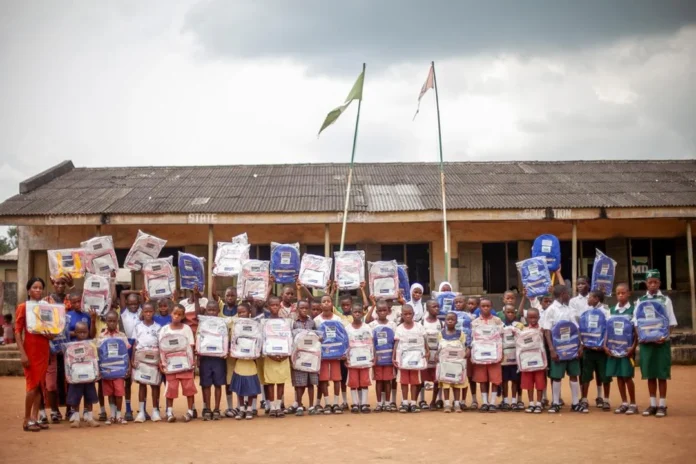
As part of its response, Solardero has provided approximately 6,000 solar-powered school bags equipped with integrated solar panels and study lights. The initiative is designed to help children in rural communities without electricity study safely after dark without depending on candles or costly kerosene lamps.
The foundation has also moved beyond individual learning support to provide electricity infrastructure for schools in remote communities.
Its interventions have included complete solar power systems and digital learning equipment, such as laptops, for rural schools. Beneficiary communities include Ibiade, which had gone for more than 20 years without electricity, and Idata in the Ibeju-Lekki axis of Lagos State.
Solardero also incorporates vocational Science, Technology, Engineering, and Mathematics training into its projects to strengthen local capacity and support the long-term use of the systems.
Through the programme, secondary school students receive basic training in solar installation and maintenance alongside certified technicians.
“Our goal is to make life easier by addressing everyday challenges around education, economic opportunity, and safety,” Enitan said, adding that the foundation aims to empower the next generation with practical tools.
“We don’t just bring light into a community; we equip young people with the skills to understand, maintain, and potentially build careers around renewable technology.”
Enitan said the initiative is focused on delivering practical impact while promoting self-reliance among the communities it serves.
“Derived from the Yoruba word meaning ‘to make life easy,’ Solardẹrọ develops solar-enabled educational products, powers rural classrooms, and delivers technical vocational training to empower the next generation,” she explained regarding the core philosophy driving the enterprise.
The social enterprise currently relies mainly on personal funding and modest revenue from its commercial products to sustain its activities.
It is seeking strategic corporate partnerships and funding to expand its operations. Its planned areas of growth include extending school electrification efforts, introducing solar tote bags to help night-market vendors operate for longer hours, and expanding vocational renewable-energy skills training to more off-grid communities.
Source: Punch
Do you want to share your impact stories or pitch the coverage of your CSR event to us? E-mail: editor@impactwatch.net or *Phone +234-806-795-0250 (Whatsapp &Text)


