

The Federal Government of Nigeria has commenced a six-week assessment of Nigeria’s tax reforms following the implementation of new tax laws in January 2026.
The review is designed to identify gaps in implementation, clarify provisions and address unintended consequences that have emerged since the reforms took effect.
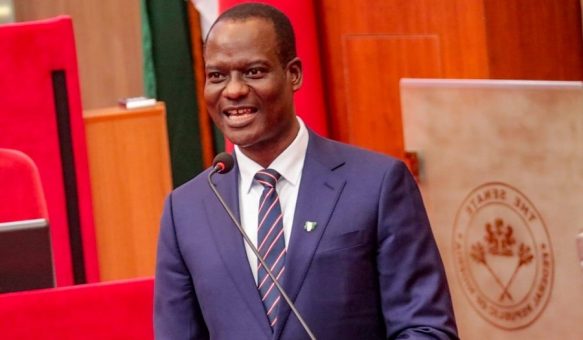
The exercise is being led by the Minister of Finance and Coordinating Minister of the Economy, Taiwo Oyedele, who also chairs the Presidential Fiscal Policy and Tax Reforms Committee.
Oyedele announced the review on Thursday in Abuja at the inauguration of the Technical Subcommittee on Fiscal Policy and Tax Reforms.
The subcommittee will examine several areas of the tax system, including Value Added Tax thresholds, withholding tax, capital gains treatment and multiple taxation. Its recommendations are expected to contribute to the proposed Finance Bill 2027.
The Federal Government said the exercise is not aimed at reversing the tax reforms introduced in 2025. Instead, it will focus on resolving challenges that have become apparent during implementation.
“The real test begins when the law meets the economy,” Oyedele said, noting that implementation had revealed areas requiring clarification, refinement and further reform.
Oyedele disclosed that the government had received 134 submissions from stakeholders across Nigeria’s six geopolitical zones after inviting public input on the reforms. Additional contributions were submitted in hard-copy format.
Among the issues raised were calls for clearer and simpler VAT thresholds, withholding tax provisions and capital gains treatment.
Stakeholders also proposed stronger measures to tackle multiple taxation and improve coordination among revenue authorities.
Digitalisation and data sharing were highlighted in other submissions, particularly as measures to reduce instances in which taxpayers are required to repeatedly submit information that is already available to government agencies.
The review will equally examine proposals concerning taxpayer rights, quicker tax refunds and safeguards for small businesses.
Stakeholders have also suggested measures to strengthen investment and competitiveness in key areas, including mining, renewable energy, healthcare and capital markets.
As part of the exercise, the Technical Subcommittee has been tasked with reviewing the Deduction of Tax at Source Regulations 2024 and preparing revised withholding tax regulations.
Oyedele said withholding tax should continue to serve as an advance-payment and compliance mechanism rather than impose an additional cost on businesses or function as a tax on working capital.
He also pointed out that holding back funds belonging to businesses for prolonged periods could raise the financial pressure on companies, particularly in an operating environment where the cost of capital is already high.
The subcommittee will further review the Companies Income Tax (Significant Economic Presence) Order 2020 and develop an updated framework that is consistent with the new tax laws and international practices.
The review comes after four major tax laws became effective on January 1, 2026. They are the Nigeria Tax Act 2025, Nigeria Tax Administration Act 2025, Nigeria Revenue Service (Establishment) Act 2025 and Joint Revenue Board (Establishment) Act 2025.
According to Oyedele, the government is now shifting from fundamental tax reform towards continuous improvement informed by lessons emerging from implementation.
He said the proposed Finance Bill 2027 should retain the fundamental principles underpinning the 2025 reforms while addressing changing economic conditions and practical challenges identified by both taxpayers and administrators.
The Technical Subcommittee has six weeks to conclude its assignment and submit its report.
The committee is chaired by the Permanent Secretary of the Federal Ministry of Finance, with Albert Folorunsho, Chairman of the Tax Advisory Committee, serving as co-chair.
Membership includes representatives from the Federal Ministry of Justice, Nigeria Revenue Service, Joint Revenue Board, Nigeria Customs Service, Central Bank of Nigeria, Debt Management Office, Budget Office of the Federation and Nigerian Investment Promotion Commission.
The Small and Medium Enterprises Development Agency of Nigeria (SMEDAN), Manufacturers Association of Nigeria, Nigerian Economic Summit Group, Nigerian Bar Association, Association of National Accountants of Nigeria, Chartered Institute of Taxation of Nigeria and Institute of Chartered Accountants of Nigeria are also represented on the committee.
Representatives of the Nigerian Association of Chambers of Commerce, Industry, Mines and Agriculture and the Big Four accounting firms are also members.
Folorunsho said the committee would seek recommendations that are technically sound, practical to administer and responsive to the realities facing taxpayers, businesses and government.
Source: Msme Africa online
Do you want to share your impact stories or pitch the coverage of your CSR event to us? E-mail: editor@impactwatch.net or *Phone +234-806-795-0250 (Whatsapp &Text)


