

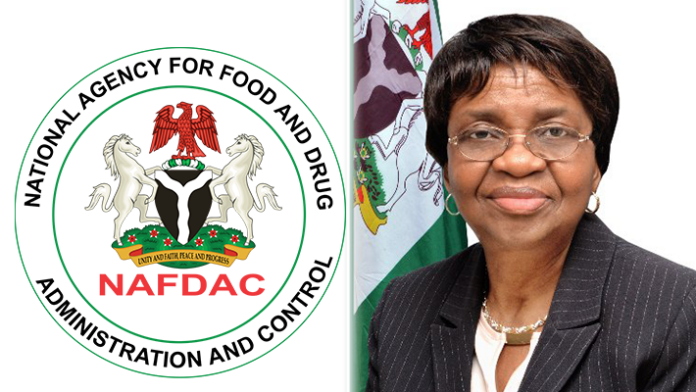
The National Agency for Food and Drug Administration and Control (NAFDAC) has clarified that raw and unprocessed agricultural commodities, including yams, oranges and apples, are not directly within its regulatory jurisdiction.
NAFDAC Director-General, Prof. Mojisola Adeyeye, made this clarification during an appearance on Channels Television’s Sunrise Daily, where she explained that responsibility for regulating raw agricultural produce primarily rests with the Federal Ministry of Agriculture and Food Security.
According to Adeyeye, NAFDAC’s regulatory responsibilities begin with semi-processed and fully processed food products. She, however, emphasised that protecting consumers from unsafe food requires coordinated action among government agencies across the entire food value chain.
The clarification comes amid increasing concerns about the use of hazardous chemicals to artificially ripen or preserve fresh agricultural produce. Chemicals reportedly used for these purposes include calcium carbide, formalin and toxic pesticides, all of which may present serious health risks when improperly applied.
The matter recently attracted renewed public attention after former Vice President Yemi Osinbajo revealed that laboratory tests had determined that freshly squeezed orange juice prepared by his wife was unfit for human consumption. The tests reportedly detected chemical contamination in the raw oranges purchased from the market.
Osinbajo’s disclosure triggered widespread discussion on social media, including questions about whether NAFDAC was responsible for regulating raw fruits and other agricultural produce.
Addressing the resulting confusion, Adeyeye explained that Nigeria’s National Food Safety Policy provides for collaboration among relevant government institutions rather than allowing agencies to operate separately.
She noted that although agricultural authorities have responsibility for raw commodities, such produce represents the starting point for Nigeria’s processed food industry.
Fruits, cassava, grains and other agricultural commodities, she explained, eventually serve as raw materials for products such as packaged juices, flour, purees and other processed foods that fall within NAFDAC’s regulatory mandate.
Adeyeye consequently called for stronger cooperation among NAFDAC, the Federal Ministry of Agriculture and Food Security, local government inspectors and environmental health officers to improve monitoring throughout the food supply chain.
She stressed that food safety should not commence only when agricultural products reach the processing stage. Instead, it should be treated as a farm-to-table responsibility involving all relevant government agencies.
The clarification underscores the importance of stronger inter-agency coordination in tackling unsafe practices associated with the handling, preservation and processing of agricultural produce, while improving consumer protection and strengthening Nigeria’s food safety system.
Source: msmeafricaonline
Do you want to share your impact stories or pitch the coverage of your CSR event to us? E-mail: editor@impactwatch.net or *Phone +234-806-795-0250 (Whatsapp &Text)


