

The Federal Government of Nigeria has launched nationwide consultations with state governments and other stakeholders as it works towards developing a National Water Compact to address Nigeria’s persistent water and sanitation challenges and improve water security.
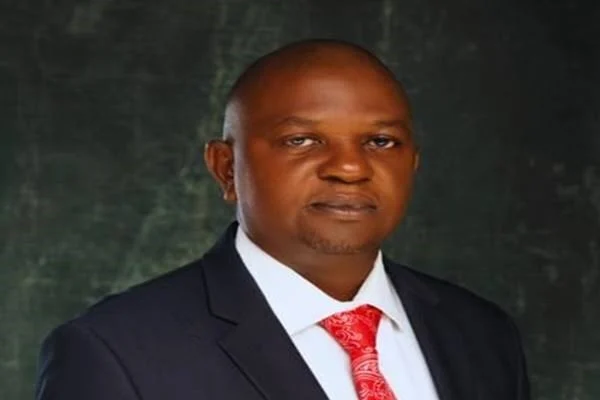
The Minister of Water Resources and Sanitation, Prof Joseph Utsev, disclosed this on Thursday in Abuja during a stakeholders’ consultation workshop convened to develop the Nigeria National Water Compact.
Utsev said the initiative was driven by several longstanding pressures confronting the water sector, including rapid urbanisation, population growth, climate change, environmental degradation, inadequate infrastructure, fragmented institutional arrangements and financing constraints.
According to him, these challenges have continued to undermine Nigeria’s capacity to deliver dependable water supplies, sanitation services and productive water use.
“Water is at the centre of sustainable development. It underpins public health, food security, economic growth, environmental sustainability, energy production and national security,” the minister said.
The move to develop the compact comes against the backdrop of longstanding concerns about Nigeria’s capacity to provide safe water, sanitation and hygiene services to its rapidly expanding population.
Government efforts in recent times have increasingly emphasised better coordination between the Federal Government and states, greater investment in water infrastructure and stronger institutional arrangements within the sector.
The water challenge has broad implications, as access to reliable water is closely connected to public health, education, agricultural productivity and household welfare. Inadequate water, sanitation and hygiene conditions can heighten exposure to water-borne diseases, while unreliable supplies can disrupt the operations of schools, healthcare facilities, businesses and communities.
The Federal Government is consequently seeking to move away from isolated water projects towards a coordinated national framework encompassing water supply, sanitation, irrigation, environmental protection, public health and climate resilience.
Utsev said the National Water Compact was being developed in line with the Renewed Hope Agenda of President Bola Tinubu and would establish a coordinated framework for transforming Nigeria’s water sector.
He said the compact would focus on strengthening governance and institutional coordination, improving sector financing, accelerating access to safe and climate-resilient water supply and sanitation services, supporting irrigation development and enhancing water security.
The minister also linked the initiative to the African Union’s adoption of the Africa Water Vision and Policy 2025–2063, which he said provided the impetus for Nigeria to develop its own national compact while adapting the continental framework to the country’s specific needs and development priorities.
Utsev disclosed that the National Technical Working Committee, made up of representatives from Federal Ministries, Departments and Agencies, state governments, development partners, academia, professional bodies, civil society organisations and the private sector, had completed the first draft of the compact.
He said the draft was produced following months of technical engagements, evidence-based analysis, inter-sectoral collaboration and consultations.
However, Utsev stressed that the document would not achieve its objectives without the ownership and participation of state governments and other stakeholders, particularly because states have a significant role in delivering and managing water supply, sanitation and hygiene services.
“The National Water Compact cannot succeed unless it reflects the aspirations, priorities and realities of the Nigerian people,” he said.
The minister disclosed that he had written to the chairman of the Nigeria Governors’ Forum to obtain the commitment and participation of the 36 state governors and the Federal Capital Territory in the process.
He added that President Bola Tinubu had also been briefed on progress in preparing the draft compact.
According to Utsev, the nationwide consultation would allow stakeholders to identify gaps in the draft, establish state priorities, recommend strategic actions and improve implementation arrangements ahead of the production of the final document.
He described the compact as more than a policy document, saying it represented a national commitment to transforming Nigeria’s water future.
The framework, he said, is built around three pillars: ‘Water for People’, ‘Water for Food Security’ and ‘Water for Planet’.
Utsev urged participants at the consultation to submit practical recommendations capable of strengthening the final document and ensuring that its implementation delivers measurable improvements in the lives of Nigerians.
Also speaking, the Acting Permanent Secretary, Federal Ministry of Water Resources and Sanitation, Ali Dalla, said the consultation offered an opportunity to establish a national consensus on the future direction of Nigeria’s water sector.
Dalla maintained that the compact should not be treated as a document belonging solely to the Federal Government but as a framework collectively owned by stakeholders.
“The National Water Compact must not be seen as a document belonging to the Federal Ministry alone. It must be a national document owned by all stakeholders and responsive to the realities and priorities of Nigerians,” he said.
He listed population growth, urbanisation, climate change, environmental degradation, inadequate infrastructure, financing constraints and institutional coordination challenges among the major obstacles to sustainable water security.
The acting permanent secretary said overcoming these challenges would require closer cooperation between the Federal, state and local governments, development partners, private sector, civil society organisations and communities.
He further highlighted the importance of stronger financing, institutional capacity, reliable data, innovation, appropriate technology and effective implementation mechanisms.
Also contributing, the Minister of State for Health, Dr Iziaq Salako, said water security was inseparable from public health and the delivery of quality healthcare.
Salako said inadequate access to water and sanitation affects hygiene, infection prevention and control, cleaning and healthcare delivery.
“Water is essential for hygiene, infection prevention and control, cleaning, sanitation and healthcare delivery procedures,” he said.
The minister called for closer cooperation between the water and health sectors, noting that floods, droughts and other environmental pressures could have direct consequences for water availability, water quality and public health.
He said the integrated approach reflected in the compact acknowledged the connections between water, health, agriculture, the environment and climate resilience.
Salako also advocated equitable water governance systems that would guarantee access for vulnerable and under-resourced populations.
“These priorities should be supported by clear responsibility metrics, sustainable financing mechanisms, effective monitoring and SMART performance indicators,” he said.
The minister further noted that universal access to safe water and sanitation could not be achieved by one ministry, agency or level of government acting alone.
“No ministry, no agency or level of government can solely achieve universal access to safe water and sanitation. Partnerships anchored on coordination, accurate data, sustainable financing and a clear accountability framework therefore remain essential,” Salako said.
He reiterated the Federal Ministry of Health and Social Welfare’s commitment to working with stakeholders towards the successful finalisation and implementation of the National Water Compact.
“When we invest in water, we invest in health. When we invest in sanitation, we prevent diseases. Our health is on the table,” he said.
The ongoing consultation is expected to generate recommendations for incorporation into the final National Water Compact, which the government hopes will establish a clearer framework for coordinated investment and action across Nigeria’s water sector.
Source: Punch
Do you want to share your impact stories or pitch the coverage of your CSR event to us? E-mail: editor@impactwatch.net or *Phone +234-806-795-0250 (Whatsapp &Text)


