

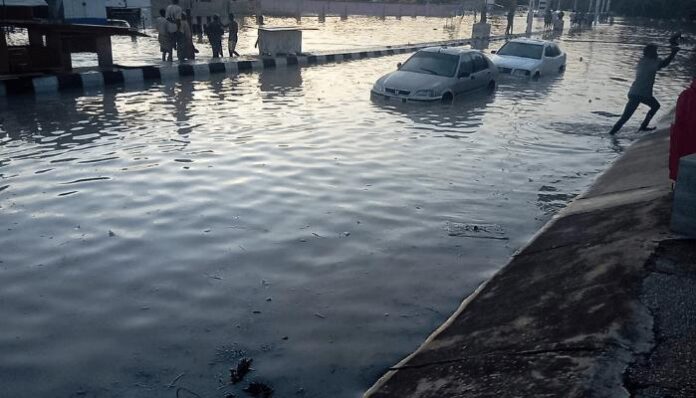
Every rainy season, communities across the country face flooding, property damage and disrupted livelihoods despite existing weather forecasts, early-warning systems, environmental ministries and emergency management agencies.
In Port Harcourt, recent floods turned streets into waterways, submerged homes and disrupted businesses as residents struggled to salvage their belongings. Other communities across the South and North have also suffered flooding and erosion, highlighting a recurring pattern of losses, emergency responses and government promises that often fade before the next rainy season.
At the centre of the debate is a question about accountability: what are governments doing with the ecological funds they receive?
Nigeria’s climate discourse has increasingly featured conferences, committees, commissioned studies and policy frameworks addressing resilience, adaptation and environmental sustainability. Yet the practical work of protecting vulnerable communities has not consistently matched the ambition of these discussions.
Although climate change poses serious threats requiring investment, technical expertise and international cooperation, the management of existing environmental funding also demands scrutiny.
Established in 1981, Nigeria’s Ecological Fund was created to address serious ecological challenges, including flooding, erosion and other environmental emergencies. Its establishment reflected official recognition of the need for dedicated funding to tackle environmental problems decades before climate adaptation became a regular feature of international development discussions.
The issue, therefore, extends beyond securing additional funding to determining how existing allocations are used and what they achieve.
In August 2026, an investigation into ecological allocations to the nine Niger Delta states, published by LINCgreen, examined disbursement records from the Office of the Accountant-General of the Federation under the Federation Account Allocation Committee (FAAC).
The report found that approximately ₦12.23 billion was recorded as gross ecological allocations to the nine states between January and June 2026. About ₦6.12 billion was transferred to the Niger Delta Development Commission (NDDC) under the statutory arrangement, while approximately ₦6.12 billion was retained by the states.
The figures cover six months and nine states. They represent allocations rather than verified expenditure or evidence of wrongdoing, and do not capture the entire national Ecological Fund system.
Nevertheless, they raise questions about whether residents can identify the projects financed by these resources and assess their impact.
In Rivers State, the analysis showed that approximately ₦746.9 million was retained from this particular ecological allocation stream during the first six months of 2026.
The amount does not represent the state’s entire environmental budget, nor does it suggest that every flooding problem could be resolved with that sum. However, it raises practical questions about the use of public funds: which drainage systems were rehabilitated, which erosion sites received attention, which flood-prone communities benefited, and where are the completed projects?
Residents should also be able to establish who executed the projects, how much they cost and whether the interventions improved conditions in affected communities.
These questions extend to the NDDC, which must also account for the ecological allocations transferred to it. Federal institutions, state governments and other public agencies responsible for ecological interventions should demonstrate how their funding has been used and which environmental problems their projects have addressed.
Public finance discussions often focus on allocations, contract awards and project commissioning, sometimes accompanied by photographs of officials at project sites. However, tracing an ecological allocation to a specific project, its contractor, cost and environmental impact can require considerably more effort.
When the next flood arrives, the questions often return without clear answers.
Climate change is frequently cited as an explanation for environmental disasters, but changing rainfall patterns and rising temperatures do not account for every flooded street or collapsing riverbank.
Blocked drainage channels, construction on natural waterways and neglected erosion-control infrastructure also contribute to environmental risks. Failure to act on forecasts identifying vulnerable communities cannot be adequately explained by climate change alone.
In some cases, basic preventive measures, including clearing drainage channels before the rains, remain essential.
For residents whose shops flood repeatedly or families forced to move their belongings to higher ground, functioning drainage systems can offer more immediate protection than another policy declaration.
This does not mean ecological funding alone can eliminate flooding. Extreme rainfall, geography, urbanisation and changing climatic conditions create risks that cannot always be prevented. Communities also have responsibilities, including proper waste disposal and compliance with environmental regulations.
However, these challenges reinforce the need for accountability. Where environmental risks cannot be eliminated, public investment should demonstrably reduce their frequency, severity or consequences.
One proposed approach is for every state to publish an annual account of its ecological funding, detailing the amounts received, projects approved, locations, payments made, completed works and outstanding projects. Governments should also identify the environmental risks the interventions have reduced.
A publicly accessible database organised by local government area could allow residents to identify funded projects in their communities, inspect the work and report whether the interventions exist and function as intended. Journalists and civil society organisations could then compare official expenditure records with conditions on the ground.
Emergency relief must also be distinguished from long-term prevention. Distributing mattresses, rice and blankets after flooding may be necessary, but an effective flood-management policy should also be assessed by the lives protected, losses prevented and infrastructure maintained before disasters occur.
As Nigeria prepares for the international climate discussions at COP31, its representatives are expected to address climate finance, adaptation and the responsibilities of developed countries. Nigeria has legitimate reasons to seek international support to protect vulnerable populations, given the global nature of the climate crisis.
However, domestic accountability should remain part of the conversation.
Questions about existing ecological allocations, the communities benefiting from funded projects, the performance of completed interventions and responsibility for maintaining infrastructure should accompany discussions about additional climate financing.
The accessibility of ecological expenditure records also deserves scrutiny, particularly when announcements about allocations are more visible than evidence of their use.
These questions should be raised at state budget presentations, legislative hearings, town-hall meetings and government events focused on climate resilience. Journalists and civil society organisations also have a role in examining spending claims and assessing whether projects deliver measurable results.
The purpose is not to presume wrongdoing by every government institution, but to establish that public funds should produce verifiable accounts and results.
Without sustained scrutiny, the familiar cycle of forecasts, warnings, flooding, emergency responses and promises of future action is likely to persist. Communities will continue to face losses while waiting for interventions that may have been announced years earlier.
Flooding itself is not unique to Nigeria, and even countries with substantial preventive investment experience extreme weather. The deeper accountability concern is whether money allocated for environmental protection can be traced to tangible results.
A practical alternative to another elaborate climate conference would be a public review bringing together government officials, affected communities and ecological allocation records to examine completed projects and their outcomes.
The central questions are straightforward: where did the money go, what was accomplished, and what do the communities say has changed?
As recurring floods continue to test Nigeria’s environmental preparedness, citizens need more than assurances about ecological funding. They need transparent spending records, functioning infrastructure and evidence that public investments are helping protect their lives and livelihoods.
SOURCE:Peoples Gazette
Do you want to share your impact stories or pitch the coverage of your CSR event to us? E-mail: editor@impactwatch.net or *Phone +234-806-795-0250 (Whatsapp &Text)


