

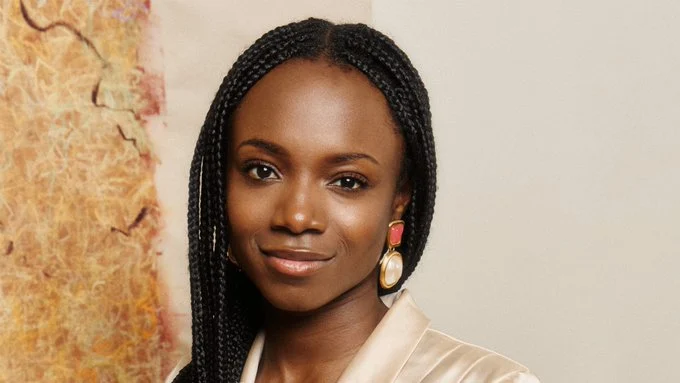
A Nigerian-American engineer and Harvard graduate, Yinka Ogunbiyi, has shared the inspiration behind HaloBraid, a patent-pending robotic system designed to assist hairstylists with braiding while reducing the physical demands of the process.
According to a post shared by the US Mission in Nigeria on X on Friday, Ogunbiyi has secured $7 million in seed funding for HaloBraid, attracting interest from more than 7,000 salons, which have already joined the device’s waiting list.
The renewed attention followed the resurfacing of Ogunbiyi’s presentation at the Harvard Innovation Challenge in 2025, where she detailed the motivation behind developing the technology. The video gained traction online after it was highlighted by the US Mission in Nigeria.
The funding round was led by Seven Seven Six, the venture capital firm established by Reddit co-founder Alexis Ohanian, with additional investment from AlleyCorp and Bling Capital.
Speaking about the idea behind HaloBraid, Ogunbiyi said her lifelong experience wearing braids and the lack of technological advancement in the hair braiding industry inspired the innovation.
“Imagine if every time you got your hair cut, it took six hours, cost $200 to $300 and gave your hairstylist arthritis at age 29.
“This is what it’s like to get your hair braided. And I know this firsthand because I’ve worn braids all my life,” she said.
Ogunbiyi explained that her first attempt at braiding her own hair lasted four days, an experience she later discovered was common among millions of people.
“Hair braiding is now the most popular hairstyle for 20 million Americans who experience this miserable process every eight weeks. And yet braiding hasn’t seen innovation since braiding was invented 5,000 years ago,” she said.
She holds a joint Master of Science and Master of Business Administration from the Harvard Engineering School and Harvard Business School. Before launching HaloBraid, she worked on connected smart home appliances and consumer electronics.
The concept for the company emerged during the COVID-19 pandemic, when Ogunbiyi spent four days installing her own protective knotless braids. The experience prompted her to explore how technology could simplify the process.
She later teamed up with co-founder David Afolabi to develop an automated braiding system intended to support professional stylists rather than replace them.
“That’s why we’re building HaloBraid, the first patent-pending hair braiding robot that saves time for stylists and their clients,” she said.
“Stylists start the braid, Halo finishes it, and we reduce braiding time from hours to minutes, making braiding joyful, not painful, and allowing a stylist to grow their business without destroying their hands,” she added.
Under the HaloBraid process, a stylist first parts the scalp, sections the hair and creates the initial anchor knot manually. The HaloBraid device is then attached to perform the repetitive braiding sequence before the stylist removes it to complete the hairstyle by finishing, trimming and sealing the ends.
Ogunbiyi said the robot uses machine learning to achieve professional-quality braiding and has already completed thousands of braids over the past year while operating five times faster than conventional methods.
“Our devices have done thousands of braids and braided full hairstyles like mine for the past year, and we use machine learning to match professional quality but to do it five times faster,” she said.
Responding to concerns that automation could diminish the cultural significance of traditional hair braiding, Ogunbiyi said the technology only performs the repetitive motions that consume the most time and place the greatest physical strain on stylists.
Industry data referenced by the company indicates that nearly 95 per cent of surveyed Black women would choose protective hairstyles more often if salon appointments were less physically demanding and required less time.
“So now we’re excited to realise our mission of saving billions of hours spent braiding hair each year and transform an industry that hasn’t changed in thousands of years,” Ogunbiyi said.
Source: Punch
Do you want to share your impact stories or pitch the coverage of your CSR event to us? E-mail: editor@impactwatch.net or *Phone +234-806-795-0250 (Whatsapp &Text)


