

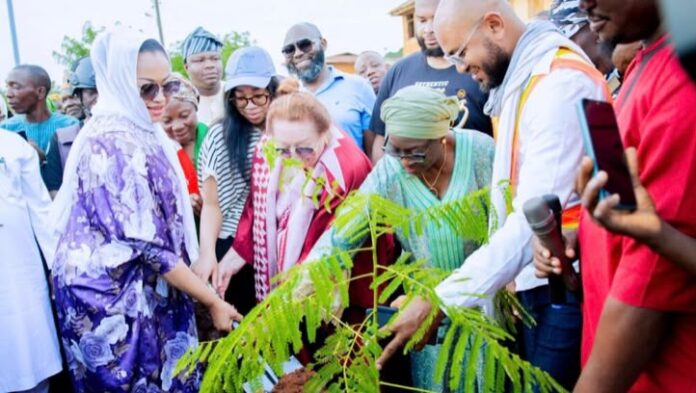
Senator Natasha Akpoti-Uduaghan, who represents Kogi Central Senatorial District, has unveiled a large-scale environmental initiative that will see the planting of 10,000 economic trees across communities within the district.
The project, themed “Growing Kogi Central, Building Our Future,” is designed to address climate change while restoring degraded land, preventing soil erosion, improving biodiversity, strengthening food security and creating sustainable economic opportunities for residents.
Under the initiative, a variety of economic tree species will be planted, including mango, guava, orange, moringa, neem and other indigenous varieties.
Speaking on the significance of the programme, Akpoti-Uduaghan described the campaign as more than a tree-planting exercise, saying it represents an investment in the future of Kogi Central while contributing to global climate action.
“Today, Kogi Central is joining the global movement for climate action. Every tree we plant is a symbol of hope, resilience, and our collective determination to leave behind a healthier environment and a stronger economy for future generations,” she said.
The senator noted that the initiative aligns with the objectives of the United Nations Framework Convention on Climate Change (UNFCCC) as well as resolutions adopted during successive Conferences of the Parties (COP), both of which promote ecosystem restoration and carbon sequestration through nature-based solutions.
“The United Nations has consistently encouraged nations and communities to embrace nature-based solutions to climate change. Through this initiative, we are domesticating those global commitments here in Kogi Central by translating international climate goals into tangible community development,” she said
Akpoti-Uduaghan explained that the choice of economic tree species was intentional because they offer both environmental and commercial benefits.
“Environmental sustainability and economic prosperity must go hand in hand. Our people should not have to choose between protecting the environment and earning a living. These trees will provide cleaner air, healthier communities, increased food production, additional household income, and lasting environmental protection,” she said.
She further stated that the project complements Nigeria’s commitments under international climate agreements by encouraging grassroots participation in environmental restoration efforts.
Highlighting the growing impact of climate change on local communities, the senator stressed the need for practical, community-driven solutions.
“Climate change is no longer a distant conversation taking place in international conference halls. Its effects are visible in our communities through erosion, rising temperatures, changing rainfall patterns, and declining agricultural productivity. This project brings the solutions closer to our people,” she said.
Do you want to share your impact stories or pitch the coverage of your CSR event to us? E-mail: editor@impactwatch.net or *Phone +234-806-795-0250 (Whatsapp &Text)


