

The Green Climate Fund approved two new Central Asia climate projects, more than doubling GCF-led investment in the region since a regional structure was introduced less than two years ago.
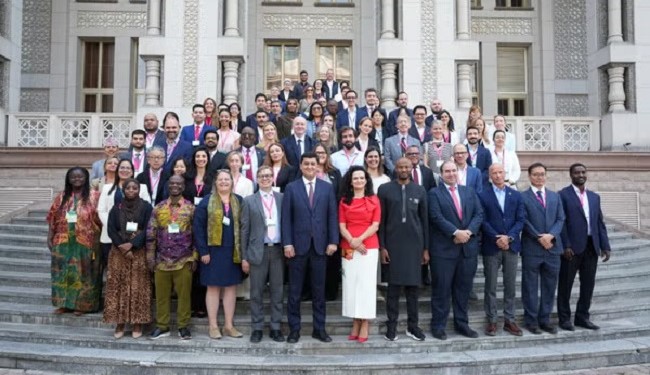
The approvals were announced during the Fund’s 45th Board meeting, held in Dushanbe, Tajikistan, the first time the GCF Board has convened in Central Asia. The newly approved investments will support climate resilience for vulnerable communities in Tajikistan while strengthening water security in both Tajikistan and the Kyrgyz Republic.
With the latest approvals, GCF-led investments across Central Asia have increased from $1.87 billion to $4.43 billion, including co-financing. The Fund said its direct investment of USD 844 million has played a catalytic role in attracting additional financing to the region.
Across its global portfolio, the Board approved $369.1 million in new climate finance for 10 projects in developing countries. Combined with co-financing, the total value of the newly approved portfolio stands at $700.6 million.
The projects focus on climate adaptation, resilience and sustainable land management across Africa, Asia, the Pacific and the Middle East. The latest approvals also include landmark GCF-funded initiatives in Syria and the Central African Republic.
Syria received its first-ever GCF project, which is designed to improve water security for communities experiencing severe climate-driven water shortages. Meanwhile, the Central African Republic secured its first standalone, single-country GCF investment, with $69.1 million allocated to strengthen climate-resilient water, sanitation and disaster management systems benefiting the country’s most vulnerable children.
According to the Fund, five of the 10 projects completed the concept note-to-Board-ready review process within its nine-month target under the Efficient GCF reform initiative. All approved projects are either fully focused on adaptation or contain adaptation components. In grant-equivalent terms, 65 per cent of adaptation funding was directed to Least Developed Countries, Small Island Developing States and African nations.
The Board also approved nine new accreditation applicants, including six Direct Access Entities (DAEs). Among them is Banco de Desarrollo del Ecuador B.P. (BDE), which becomes Ecuador’s first national Direct Access Entity.
In addition, Board members received a Reform Journey Report outlining initiatives introduced over the past three years to improve the Fund’s operational efficiency. The Board also approved the process for GCF’s third replenishment fundraising cycle, formally launching the next round of fundraising.
Co-Chair Amb. Seyni Nafo from Mali said the decisions adopted during the meeting reflected the Fund’s commitment to expanding climate finance for developing nations.
“The decisions taken at this Board meeting in Dushanbe once again demonstrate GCF’s commitment to delivering climate finance at scale for developing countries. By supporting first-ever projects in Syria and the Central African Republic, we are extending our reach to some of the most vulnerable communities with the aim that no one is left behind.
“I am particularly encouraged by the strong focus on adaptation, which responds directly to the urgent needs of countries already facing the impacts of climate change. I am also pleased to see continued progress in strengthening country ownership, including projects led by direct access entities in Indonesia and Nepal. This reflects the Fund’s commitment to empower national institutions to lead on climate action and deliver finance where it is needed most.”
Co-Chair Leif Holmberg of Sweden said recent reforms have enabled climate finance to move more quickly from approval to implementation.
“The decisions taken at this Board Meeting reflect how GCF’s ongoing reforms are enabling climate finance to reach developing countries more quickly and with greater impact. The fact that seven project Funded Activity Agreements were signed immediately after the Board means these investments can begin delivering support on the ground without delay.
“The project with Deutsche Bank on the Mekong Earth Regeneration Fund underscores GCF’s ability to mobilise private sector investment at scale. Two other projects provide critical support to health resilience in the Central African Republic and Togo, countries on the frontlines of the climate crisis. In short, GCF is continuing to leverage partnerships, unlock additional resources, and deliver tangible results where they are needed most.
“The approval of an updated Gender Action Plan is particularly noteworthy, meaning our gender policy is now backed up by a plan for credible, concrete actions to strengthen gender equality.”
Executive Director Mafalda Duarte highlighted the significance of hosting the Board meeting in Central Asia for the first time and pointed to the Fund’s long-standing partnership with Tajikistan.
“We are delighted to have held this Board meeting in Tajikistan, the first ever held in Central Asia. GCF is a long-standing partner to Tajikistan – approving our first project a decade ago. Over the subsequent 10 years, we have built a strong portfolio, including these new projects, that is delivering capital at scale through a partnership based on impact.
Our reforms have made us more country-led, efficient, and impactful. Since a new regional team structure was established in September 2024, our total investments in Central Asia have more than doubled. Our risk-taking finance has catalysed significant amounts of additional capital for climate action where it is most needed. Importantly, more projects are being approved within our nine-month service standard of moving from concept note to being Board-ready. These reforms demonstrate that GCF is increasingly fit for purpose to respond effectively to the magnitude of the climate crisis.”
The Green Climate Fund held its 45th Board meeting (B.45) in Dushanbe, Tajikistan, from 29 June to 2 July 2026. The Fund works through a network of 177 Accredited Entities implementing projects in more than 130 countries. Its global network includes more than 110 regional and national Direct Access Entities drawn from the public, private and non-profit sectors, alongside international financial institutions, multilateral development banks, United Nations agencies and commercial banks.
Do you want to share your impact stories or pitch the coverage of your CSR event to us? E-mail: editor@impactwatch.net or *Phone +234-806-795-0250 (Whatsapp &Text)


